SSPN Test Site

Author: tgarrun

  • Parktown on top in nine-try thriller against Saints in King Price Derby Series

    Parktown on top in nine-try thriller against Saints in King Price Derby Series

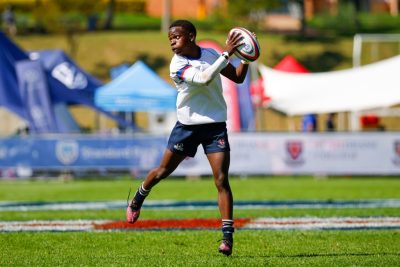
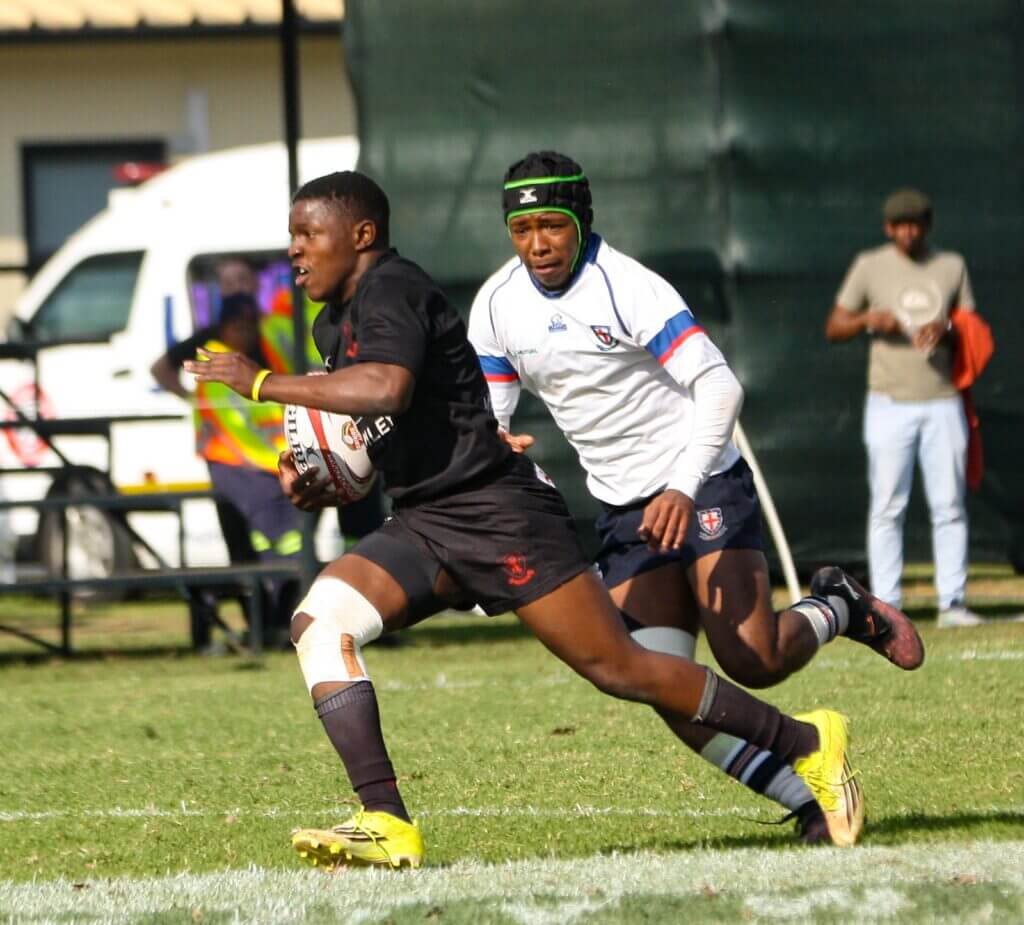
    Photo: Theo Garrun

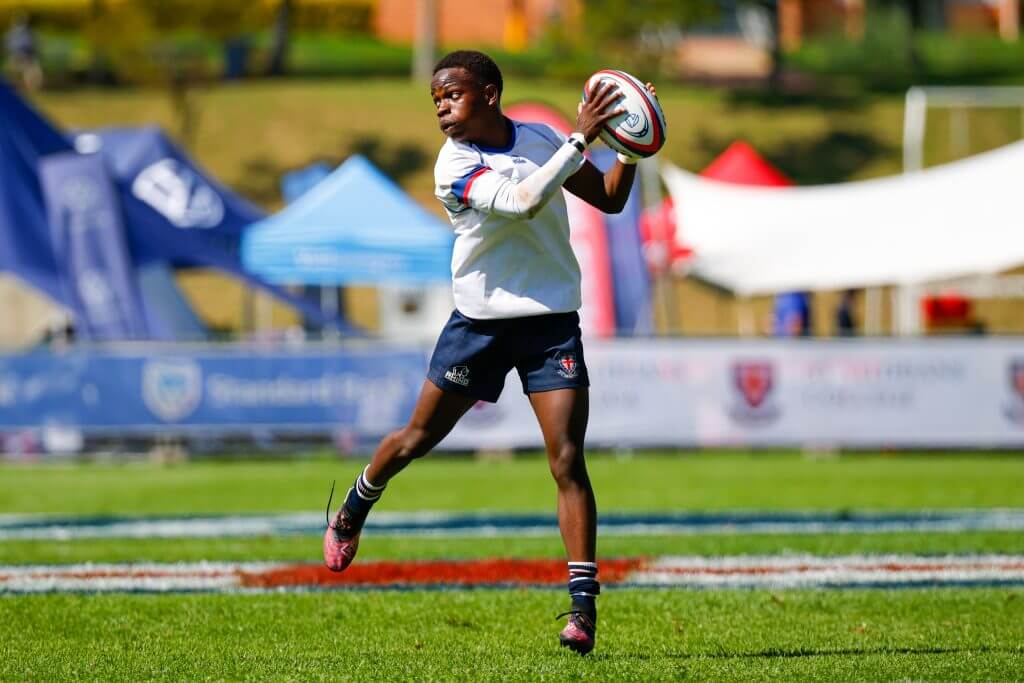
    Parktown Boys’ High came out on top of a nine-try thriller against St Stithians College in a King Price Derby Series clash on Baytopp field on Saturday.

    The visitors won by 30-27 in the end after the Saints turned down a shot at goal from right in front of the posts in injury time, which would have salvaged a draw for them.

    Instead, they chose a scrum and went on the charge off it, only to knock the ball on and hand the win to a jubilant Parktown team.

    The half-time score was 12-12, with both sides scoring two tries and converting one. Those missed kicks were to set the tone for the game, with both kickers having an off day and a load of possible points left on the table.

    Saints were first on the board through a try by winger Calvin Wagner in the fifth minute following a full backline move.

    Parktown’s Ndzalo Mahubela pulled one back soon afterwards, and they then went ahead through lock Chulu Xongwane, off a rolling maul. Wagner then got his second touchdown, in a similar fashion to his first, to level the scores at the break.

    Saints’ fullback Tindashe Mambure scored directly from the second half kickoff, and Matthew Anderson added the conversion to put the hosts ahead for the first time in the game, 19-12. Anderson then added a penalty to make it 22-12, and a home victory looked on the cards.

    The elusive Parktown backs began to work their magic, however. Centre Christian Cele scored following a move that started in his own half, and winger Yazheka Ntshona went over following good work by scrumhalf and King of the Match, Andile Zondo. That levelled the scores at 22-22.

    Parktown went ahead in the 26th minute through Hlayisani Mbambo, only for Saints to draw level again through replacement prop Larson Rujuwa. The kickers were both sending the conversion attempts wide at that stage before Parktown’s Lethabo Malahlele got one right, from a penalty in the 32nd minute to put his side 30-27 ahead.

    Then came that frantic final minute and the failed quest for glory by the Saints. It brought a highly entertaining spectacle to a close.

    Scorers: 

    Parktown Boys’ High 30 (12) – Tries: Ndzalo Makhubela, Chulu Xingwane; Christian Cele, Yakheza Ntshona, Hlayisani Mbabmo. Conversion: Lethabo Malahlele. Penalty: Lethabo Malahlele. St Stithians College 27 (12) – Tries: Calvin Wagner (2), Tinodashe Mambure, Larson Rujuwa. Conversions: Matthew Anderson (2). Penalty: Matthew Anderson.

  • Saints looking to turn the table against Parktown in King Price Derby Series clash

    Saints looking to turn the table against Parktown in King Price Derby Series clash

    The King Price Derby Series clash between St Stithians College and Parktown Boys’ High at 14:00 on the Baytopp Field at Saints is a significant one.

    Not only is it one of the oldest traditional boys’ school derbies in Johannesburg – it has been played since the 1960s – but it is also a clash between two rugby schools that have fallen from their former glory years, yet have kept their programmes going.

    There will be 16 rugby games between the schools on Saturday, which is very encouraging.

    Catch all the action LIVE on SuperSport Schools (www.supersportschools.co.za) or on DStv Channel 216.

    There will be no shortage of passion in the first team clash. Games between the two schools have always been closely contested. Historically, the record is quite even. Parktown won the 2025 clash 24-14, so Saints would like to set that straight.

    They won the 2024 game 25-15, while the 2023 meeting, which officially marked Parktown’s Centenary, was won 13-3 by Parktown.

    On recent form, St Stithians goes into the game as the slight favourite. They come off two wins in their most recent games – 38-8 over St Alban’s and 21-12 over King David Linksfield.

    Parktown, on the other hand, lost its last two matches. They were beaten 24-8 by King Edward VII (KES) a fortnight ago, and last weekend they went down 21-24 to St David’s Marist Inanda.

    They gave a good account of themselves at KES, however, and, by all accounts, were unlucky to lose to St David’s.

    Results do not always go according to form in derby games like these, however, and a meeting of close neighbours, in front of a big crowd, can generally go any way.

    TEAMS 

    St Stithians College: 15 Tinodashe Mambure,14 Oliver Lang, 13 Omphile Maphira, 12 Sicelo Sakawuli, 11 Calvin Wagner, 10 Matthew Anderson, 9 Cameron Blignaut, 8 Kenneth Thring, 7 Blake Morton, 6 Jonathan Steyn, 5 Adam Stoutjesdyk, 4 Matthew Nash, 3 Anikwa Sikiti, 2 Kabelo Tlou, 1 Noah Tomkinson.

    Parktown Boys’ High: 15 Ndzalo Makhubela, 14 Vuyo Noah, 13 Hlayisani Mbambo, 12 Christian Cele, 11 Yakheka Ntshona, 10 Lethabo Malahlele, 9 Andile Zondo, 8 Inako Nokwe, 7 Daniel Lumbala, 6 Thando Khoza, 5 Ophiwe Ndumo, 4 Chulu Xongwane, 3 Nkaiseng Motlhalefi, 2 Lulama Sithole, 1 Simakade Mokoena.

    Referee: Ruaan Jooste.
    Kick-Off: 14:00

  • Champs pull off successful title defences in Standard Bank SA Schools Boat Race

    Champs pull off successful title defences in Standard Bank SA Schools Boat Race

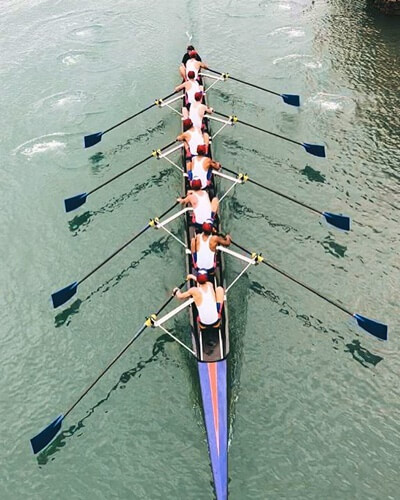
    It was a case of “same again” at the 2025 Standard Bank SA Schools Boat Race, which was contested on the Kowie River, in Port Alfred, last weekend.

    The 2024 winners, St Benedict’s College and St Andrew’s School for Girls, successfully defended their titles in the Boys’ and Girls’ A finals, respectively

    St Benedict’s has now won the boys race for Eights for seven years in a row. It was a second win on the trot for St Andrew’s in the girls’ Coxed Quad A final.

    The Schools Boat Race is the longest on the rowing calendar – 5.4km for the boys and 4km for the girls – which is double, or more than double the standard championship distance of 2km.

    It is unique in that it is a heads race. That means that, instead of the crews all lining up in a row and racing against each other, they row against the clock on day one to determine which final they will be in and then go off in pairs on finals’ day to determine the finishing positions.

    And the course is on a river, with bends and bridges along the way. It is also part of a river mouth, which means tidal changes affect racing conditions between the two days and even during each day.

    That makes the role of the coxswains crucial – they need to steer the best lines around the bends and under the bridges, and their decisions can make the difference between winning and losing.

    The SA Schools Boat Race follows the traditions and many of the regulations of the Varsity Boat Race on the Thames River, in London. That race, between Cambridge and Oxford Universities, is arguably the biggest single race event in the world. This year, over 250 000 spectators lined the banks of the river, and there was a TV audience of 15 million.

    In the boys’ final, St Benedict’s beat St John’s by seven seconds. St John’s, who contested the final for a third time, had pipped Bennies by three seconds in the time trial the previous day.

    St John’s previously won the title in 2014 and 2011. Since St Mary’s Waverley‘s long-serving head coach, Caitlin Dace, moved to St John’s earlier this year, rowing has undergone a resurgence at the Houghton school. Only Bennies had a better season, with St John’s finishing second to the Bedfordview powerhouse in both the SA Schools and the Gauteng Championships.

    When St Andrew’s won in 2024, they broke a stranglehold that St Mary’s had on the title, having won it for the nine years preceding the St Andrew’s triumph.

    St Stithians has finished second in each of the last three edition of the Boat Race.

  • Holiday madness!

    Holiday madness!

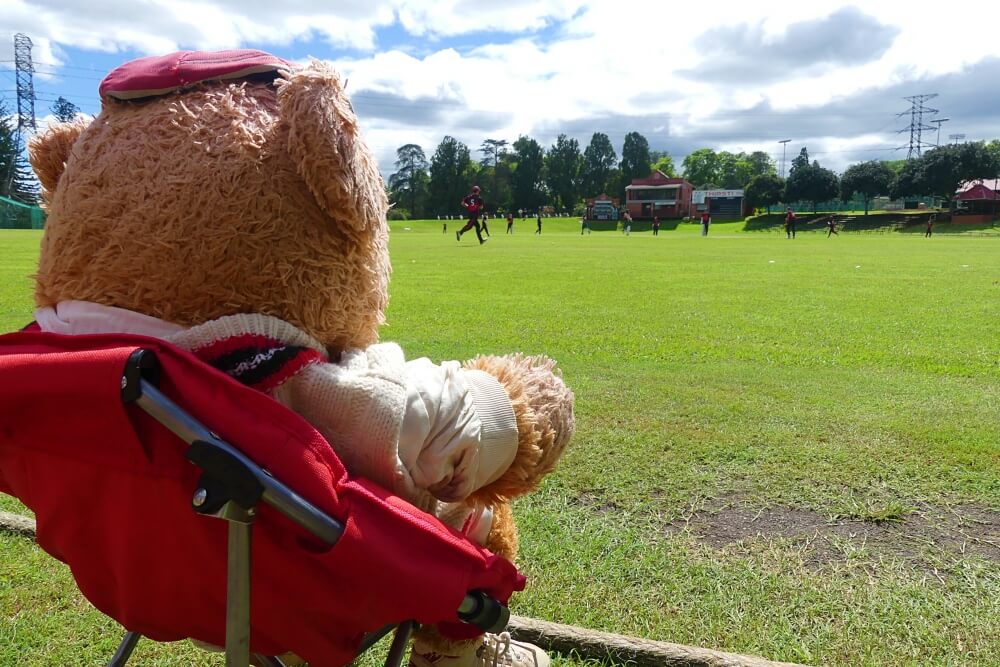
    Maritzburg College's cricket mascot, Mikey, enjoying a day out at Goldstone's. Photo: Brad Morgan.
    Maritzburg College’s cricket mascot, Mikey, enjoying a day out at Goldstone’s. Photo: Brad Morgan.

    It is said that there’s no rest for the wicked. That may be true, but in my experience, there are some very good men and women who happily give up their precious periods of rest, year after year, for the benefit of other people’s children.

    I’m talking about the teachers at the best of our schools, of course.

    They may or may not receive some sort of travel and sustenance allowance for the days that they are away from home. Their efforts are borne in mind, I hope, when annual bonuses are allocated, since they do it for no financial reward.

    I spend some time at two of Joburg’s boys’ schools these days and their forthcoming short October holiday period – which was, I guess, originally intended to give everyone a breather ahead of the push towards the final exams – is jammed with tours and tournaments in all of the summer sports codes that have only just began their 2025/6 seasons.

    Two of the big first team events, the Michaelmas Cricket Festival, hosted by Maritzburg College, and the SACS Waterpolo Tournament, have been going for many years. Now they have been joined by events in other age groups, including, of course, the basketball tournaments and festivals that have emerged in response to the phenomenal growth of the game at schools.

    Opportunities are created for children to do what they love and to learn the lessons that touring provides, and those are positive things, but there is another side to it all.

    It’s about the calendar. There’s room for just two rounds of interschool sports fixtures in the fourth term, before exams begin. Next year’s rugby and hockey schedules are congested, and they have been steadily growing over recent years. The result has been that first term dates available for summer sports have been curtailed over the years.

    So, it’s beginning to look like the summer codes are being organised according to tournaments and festivals, rather than featuring a game a week against traditional local rivals, like we used to have back when I was involved. Hockey and rugby are also going that way, it seems.

    That has resulted in a number of the schools that were involved in weekly fixtures against the schools where I work dropping out. They are no longer competitive and no longer field enough teams to make it worthwhile for the bigger schools. That’s a tragedy.

    There are many reasons why that has happened, with one of the main ones being that they find themselves on the other side of the professionalisation of the school sports’ coin. Their talent has been stripped through recruitment and, admittedly, they no longer put in the effort that they used to (for their own reasons).

    So, at schools where mass participation is valued – alongside elite high performance – you have to go the festival route to organise enough games for your teams.

    That’s why, over the next two weeks, the schools I mentioned, along with others of their ilk across the land, will be in action in the KZN Midlands, in Gqeberha, at Grey College, in Pretoria, at Paarl, and Durban.

    I’ll be keeping an eye on the action as much of it as I can, thanks to the magic of SuperSport Schools. And thanking the Lord for that horde of teachers who have forgone their well-deserved rest to make it all happen.

    The author, Theo Garrun, writes in his personal capacity. His views do not necessarily reflect the opinion of SuperSport Schools.

  • OPINION: Standard Bank and Johannesburg’s Easter festivals

    OPINION: Standard Bank and Johannesburg’s Easter festivals

    Easter is rugby festival season in Joburg, and the excitement is building. The three Standard Bank Festivals have been around for quite a long time now – it’s the 41st edition of the Saints Festival, KES has been around since 2002, and St John’s is calling this year their 28th.

    The numbers have been blurred by the two Covid years – 2020 and 2021 – when the festivals didn’t happen, although the Saints Sports Festival was staged in 2021 when it featured seven-a-side rugby.

    Be that as it may, the rich history that exists, and the traditions that have been developed over the years, guarantee the ongoing popularity of the events, despite the plethora of other rugby activities that are now scheduled at a time when, in the old days, the Easter Festivals were pretty much the only things going on.

    In the beginning, the Joburg festivals used to attract the cream of South African rugby schools. Many of those go elsewhere these days, but that doesn’t matter all that much. The games played have shown down the years that many schools play attractive rugby, and the gate-takings prove that the crowds will flock to watch them.

    It all began at St Stithians back in 1984. The college turned 30 that year. A rugby festival is generally the cornerstone of such celebratory programmes, and there and then, the St Stithians Easter Rugby Festival was born. The brains’ trust at the time consisted of the headmaster, Mark Henning, the master in charge of rugby, Tim Clifford, and the chairperson of the Parents’ Association, Colin Hall. Sadly, all three are no longer with us.

    The three men had different motivations. At the time, St Stithians, and the other private schools, had begun to enrol black boys, a move that wasn’t welcomed by the rugby authorities. Those players weren’t eligible for provincial selection, and schools with black players weren’t allowed to enter league competitions. Henning wanted all his boys to have every opportunity to perform, so he decided to use the idea of the festival to let the black players at all the formerly white schools who had them shine on a bigger stage.

    Hall, the businessman, saw it as an opportunity to raise the profile of the school and get it noticed on the national stage. Clifford, the rugby man, wanted to see the best schools and players play at St Stithians and to test his team against them.

    And so it started. Ten schools played in that first festival: Alexandra High, Bishops, Capricorn, Kearsney (now also home to a long-standing Easter Festival, backed by Standard Bank, which began in 2008), King Edward VII School, Potch Boys’ High, Pretoria Boys High, St Andrew’s College, St John’s, and St Stithians.

    The words “like-minded schools,” appeared in the first festival programme, and they would be used to describe who was invited – to all the festivals – from then on. But, in the beginning, they had a more serious and sinister meaning. What they were talking about were schools that would be happy to play against players of colour, who would field boys who treated them with dignity and respect. That wasn’t always the case in those days.

    It was decided at the outset that it would be a festival. There would be no overall winner, no tournament team would be selected, and no man of the match awards would be given. The idea was to match schools which didn’t normally meet during the season. Those basic principles were adopted at the other festivals too, and they are still in place, nominally anyway.

    One of the rules of the Saints Festival was that schools would be invited for two years at a time and then sit out. This was done so that the net could be spread as wide as possible. St John’s was one of the original schools, but they had to stand down after two years and again four years later, after their second stint there. By then, the value of an early-season festival had become evident, and the people at St John’s asked, why not have their own festival, where their boys can play every year? So, they did that in 1995. Any fears there would not be enough good rugby teams or enough spectators to go around were soon laid to rest.

    King Edward VII School celebrated its Centenary in 2002, and it decided to stage a rugby and hockey festival to mark it. The idea was that it would be a once-off, and KES had committed to go back to the Saints Festival in 2003. It was such a success, however, that it was decided to make it an annual event. There were u16 teams at the 2003 festival and, since then, it has featured first hockey and rugby teams and has been a third sell-out Joburg Easter feast every year.

    From the earliest days, there has been a commercial aspect to the festivals. All sorts of businesses recognised the marketing opportunities presented by having so many of the top schools with their supporters at a single venue. There have been advertising and activations at all of them. And over-arching them all, a title sponsor.

    Standard Bank has been that for the last 14 years. The role of sponsorship in school sport can be tricky. A sponsor wants a return on its investment, naturally, but I’ve always believed that there’s more to it than the numbers. At the end of the day, it has to be about the development of the children and the game.

    School rugby festivals are valuable properties – I hate that term – because, as Standard Bank puts it “(they) give a glimpse into one of the most loyal community sets, from students, parents, old boys (alumni) and coaches, all the way to medics, matrons, and groundsmen. While the heart of the tournament is centred on rugby and promoting true sportsmanship, it is also an event that brings together communities and families.”

    I’ve heard the organisers at all three Joburg festivals call the Standard Bank people “part of the family”. It isn’t just a “give money and measure the return” deal.

    That’s the best type of sponsorship. Good for them.

    There are tasty clashes on the cards at all three venues over the weekend, and I’ve often bewailed the fact that I can’t be in two or three places at the same time to watch them. SuperSport Schools has changed that now, of course.

    It’s the Easter rugby festival season in Joburg, and I can’t wait.

    These views are the views of the author and do not necessarily reflect the opinion of SuperSport Schools.
  • Schools’ water polo is a feel-good success story

    Schools’ water polo is a feel-good success story

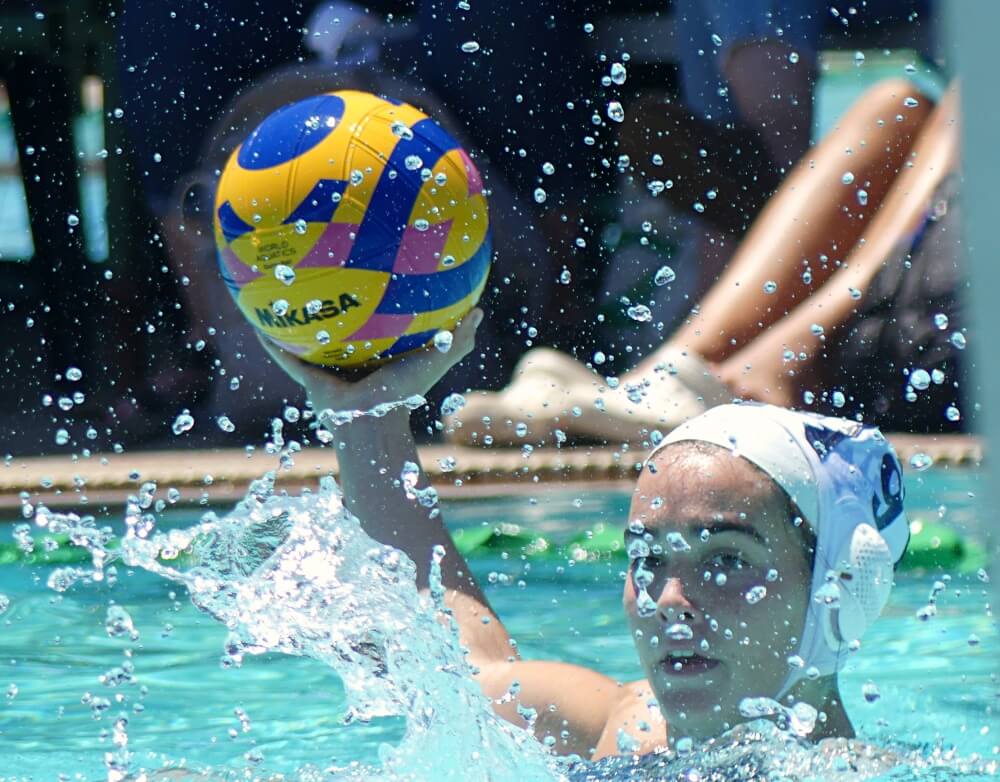
    Alexa de Villiers in possession for Western Province u19A against Central Gauteng u19B at the Schools Water Polo South Africa Inter-Provincial Tournament in East London, one 10 December, 2024. Photo: Brad Morgan.
    Alexa de Villiers in possession for Western Province u19A against Central Gauteng u19B at the Schools Water Polo South Africa Inter-Provincial Tournament in East London, on 10 December 2024. Photo: Brad Morgan.

    If ever there was a school sporting success story, it has to be water polo.

    Over the next two weekends, the epicentre of the sport will be in Johannesburg with six national tournaments taking place at local schools, covering boys’ and girls’ polo, at 1st team level, and the junior age groups.

    Over 2 000 boys and girls will be in action, playing several matches a day, and at the end, they will have spent three days in healthy activity, outdoors (or indoors in some cases), in the company of like-minded teenagers.

    That’s quite an achievement these days when there’s so much talk of young people becoming more and more sedentary and refusing to move away from the electronic devices that occupy so much of their time.

    It’s all happened quite quickly. Water polo doesn’t have the 100-year-old history at schools that sports like cricket and rugby do. I remember when inter-school water polo matches were pick-up games, arranged for boys, after swimming galas on Wednesday afternoons.

    In 1981, I was part of a small committee that resurrected the Old Eds schools tournament, inviting some out-of-town teams to play in what was then the only national event. That tournament morphed into the King Edward VII (KES) Water Polo Tournament that takes place next weekend – one of the indoor events, in the impressive Mark Stevens Aquatic Centre at KES.

    Around 1983, a pre-season national tournament, to be hosted by SACS in Cape Town, was started up and it and the KES tournament have remained among the most prestigious boys’ water polo tournaments on the calendar ever since.

    The South African Schools inter-provincial tournament was five years old at that stage. It involved u19 boys teams only and, I recall, it was generally won by what was then Natal, every year.

    Girls’ water polo made a short-lived appearance a few years later with an interprovincial tournament, involving Transvaal, Natal, and Western Province. The Transvaal team was made up of girls from Rand Park, Hyde Park, Roosevelt, and Krugersdorp High. The local girls’ schools weren’t interested in the game then, and the experiment was short-lived.

    How that’s changed! Girls’ water polo, I’m told, is now the fastest-growing sport in the country, and the girls-only schools have embraced it and taken it to a level that we never dreamed of in those days.

    Action from the final of the boys' u19 competition at the 2024 Schools Water Polo South Africa Inter-Provincial Tournament in East London. The IPT featured competition in 10 different events. Photo: Brad Morgan.
    Tristan Uys, of KwaZulu-Natal u19A, fires a shot goalwards in the final of the boys’ u19 competition at the 2024 Schools Water Polo South Africa Inter-Provincial Tournament in East London. The hugely popular IPT had 10 titles up for grabs. Photo: Brad Morgan.

    In December this year, the 50th Schools Water Polo South Africa Inter-Provincial Tournament will be held in Johannesburg and it will be massive. There will be boys and girls teams in all the age groups – u13, u14, u15, u16 and u19. Some claim it is the biggest tournament in the world, although I’m not sure about that.

    And the girls take centre stage this weekend with the u15 Shaun Fuchs Tournament at Crawford College Lonehill, and the Old Petrians – the foremost girls’ 1st team tournament – at St Peter’s College.

    Some of those girls will be back a few days later, playing in the Reef Cup tournament at St Stithians. The Reef Cup was originally for the Joburg co-ed schools but has developed into a massive national event involving 20 girls’ teams – involving most of the top schools, and a few from Zimbabwe – and 20 boys’ teams, drawn from the schools that aren’t invited to the KES tournament that is on at the same time.

    The Indigo Tournament, for u15 boys, is on at Parktown Boys’ High over that weekend (named after Indigo Girl“, the Watershed hit song. Watershed’s lead singer, Craig Hinds, is a Parktown old boy. He was a top water polo player in his day and taught and coached at the school before going into music). Across town, the Ken Short Tournament, for u14 boys, will be staged at Jeppe High School for Boys.

    The KES tournament involves 16 teams. The two junior events are bigger: 24 teams at Parktown and 22 at Jeppe.

    That means well over 2 000 players participating over the two weekends, and I’m not even talking about the scores of teachers, coaches, and other adults who will also be there.

    As I said, it’s an undoubted sporting success story. And the standards are high. At u18 level, South African teams have done very well against international opposition. At senior level, we drop off, mainly because the game is professional in much of the world and our part-timers simply cannot put in the training time that the other teams do.

    The administration of the game at senior level is also (to be very kind) not good – but that’s a story for another time.

    The success and growth of water polo as a school sport have to be seen in the context of the effort required to play it. Apart from swimming training – and most polo players also swim for their schools – there are practices every day and they are generally far longer than those in other sports. It’s not a game that anyone can try out. You have to be a strong swimmer first.

    I’m looking forward to the upcoming glut of action. I’m in awe of the boys and girls who have decided to get out there and be part of it, and grateful that we still have teachers who are prepared to sacrifice their time the way they do and pleased that a small group of teachers decided in the early 1980s to start taking the game seriously.

    You’ll be able to watch just about all of it on SuperSport Schools, of course.

  • Opinion: Schoolboys’ rugby needs a reset

    Opinion: Schoolboys’ rugby needs a reset

    hands holding rugby ball on fieldThere used to be a summer and a winter when it came to sport at school.

    Schools used to insist on participation in a summer sport and a winter sport, as part of a declaration of believing in the value of a “holistic” education, one that sends well-rounded women and men out into the world after their 12 years in the system.

    Some schools still believe in that, although it must be harder and harder to enforce. At many of the schools that take rugby seriously, the quaint notion of an A team player packing away his cricket pads, or hanging up his Speedo to dry at the end of February, and getting ready to switch codes, is a distant memory.

    I’ve come to accept this as standard practice. It’s unavoidable, given the seriousness and sophistication of the top rugby schools – those who feature in the ranking tables, and who get there because of their weekly results. The thinking is that, because some of the schools operate that way, every school has to. You will not be competitive if you don’t.

    The level of skills and conditioning required for players to be selected for provincial squads, which will set them on the pathway towards a possible career in the game, is such that some schools believe they have an obligation towards their most talented players to set aside enough time for their preparation.

    That means all-year rugby. There’s simply no time for anything else anymore.

    I’ve been an observer of schools’ rugby for a long time and the change has taken place in front of my eyes. In the past, I pushed back against it. I’m still not entirely happy.

    Ask Google the right questions, and you’ll find any number of experts who will insist that specialisation in a single activity by young sportspeople is harmful to them, both psychologically and physiologically. You’ll quite easily find a list of world-beaters who played multiple sports at school.

    Then, there’s the non-negotiable fact that a school is an educational institution, not a sports academy. Everything that happens in a school has to be educationally accountable. That’s a principle that should apply, even if it means that the possibility of winning rugby matches might be compromised sometimes.

    On the other hand, I confess to having double standards. I’m a lover of schoolboy rugby. The quality of rugby played by the top schools has improved beyond recognition since a more professional approach to coaching at this level has become more common. I’ll watch those teams play, any day.

    It’s all quite new, I know. It’s going to take some very good leadership to untangle it, but there’s no question that we need some kind of reset.

    There are a number of unsavoury practices in place – in some places, not everywhere, to be clear – and rugby at schools’ level, if it is to remain an educational activity, has to cut them out.

    I kicked off with the question of early specialisation. There are other evils, like the poaching of players, in the guise of offering better educational opportunities; there is age-group cheating and, of course, the abuse of performance-enhancing substances.

    It’s not a story with a singular thread, I know.

    South Africa won’t remain in the top tier of international rugby if we don’t keep the pipeline of talented young players flowing. No one is denying that. What I’m saying is that schools cannot abandon their educational principles in service of that. We do, however, have the unique obligation of having to increase the number of black players at the top levels and their schools do have a role to play.

    I’m a lover of schoolboy rugby, of the old and the new. I love going to the big festivals to watch some of the “top 10” teams play, and I go to the Craven Week just about every year. I’m always astounded at the quality of the teams and by the talent on show.

    But I also love hearing that when Maritzburg College plays Westville Boys’ High, for example, there will be 25 rugby matches on the day. And it warms my heart to see struggling schools hanging in there, fielding just two or three teams in their fixtures, even though they can’t match the “super-schools” anymore – the ones that were once their traditional rivals.

    You cannot argue that both types of school rugby are not important and valuable. If only they could both continue to thrive, side, by side. I’m worried that they can’t, and that they don’t anymore.

    The elite, professional game is harming the mass-participation game, and the problem starts with believing that winning 1st XV rugby games is the primary measure of a school’s success and that schools’ rugby is where the preparation of players for the professional game should take place.

    The top schools get stronger and stronger, and the bottom ones disappear. Where’s the good in that, I wonder?

    These views are the views of the author and do not necessarily reflect the opinion of SuperSport Schools.
  • Lessons from a life in cricket

    Lessons from a life in cricket

    MAKHANDA, SOUTH AFRICA – DECEMBER 15: Guest speaker Adrian Birell during the Khaya Majola Week opening ceremony at Graeme College on December 15, 2023 in Makhanda, South Africa. (Photo by Micheal Sheehan/Gallo Images)

    I sometimes wonder about the wisdom of getting some ex-player or current coach as a guest speaker to address a hall full of teenage players at events like the opening ceremony of the u19 Khaya Majola cricket week.

    They generally don’t know who he is, and what they want is to go out and play, not listen to some old guy rattle on.

    So, when they rolled out Andrew Birrell in Makhanda on Friday night, jaded, sceptical old me rolled my eyes a little bit. Thirty minutes later, I was applauding enthusiastically along with everyone else.

    The man is a natural storyteller, and he told the customary Eastern Cape narrative about two old farmers at the Pig ‘n Whistle in Bathurst – which is best not repeated – but his real impact was when he told the boys that the next four years are the most important of their lives, in cricket and away from it, and then explained why.

    They were spellbound.

    For those who don’t know who Adi Birrell is, he was born and raised in Makhanda. He played for Eastern Province at school and first-class level, before turning to coaching. He coached at the Titans and Warriors before coaching Ireland at the 2007 ICC World Cup. In 2013 he was appointed assistant coach of the South African national team and he has been head coach of Hampshire in County cricket since 2018. He also coaches Sunrisers Eastern Cape in the SA20 tournament.

    When he played at the, then, Nuffield Week, his dream was to play for South Africa, but he didn’t, and looking back he is glad that he wasn’t good enough, he told the boys. It was the reason why now, at age 63, he is still actively involved in cricket at a high level.

    “My dream was to be a top professional cricketer, and when that didn’t happen I turned to coaching. I was successful because I believed in that dream, but also because I did the hard work that was needed,” he said.

    Birrell’s father, Harry, taught at St Andrew’s College in Makhanda for many years and it was from his teachings that Adrian draws four of the biggest obstacles that get in the way of making it in the game. The first, he told the boys, is failure to do the hard work. He distinguished between natural talent, which comes easy, but doesn’t guarantee success, and real talent, which is about driving yourself to be better, and doing it while no one is watching.

    The second obstacle is drugs and alcohol. Birrell himself does not drink, and he believes that having clear eyes and a sharp mind every day of his life has given him an edge.

    Then there’s peer pressure. “Your friends will try to distract you and it’s difficult to say no to them, but it’s a sacrifice you have to make, Birrel said. “You won’t make it if you don’t.”

    The biggest obstacle, however, is arrogance and ego. Natural talent means the game comes easy to some, but that doesn’t guarantee success. Those who aren’t arrogant and who work harder than anyone else, despite having the talent, will turn out to be the superstars, he said.

    His advice to the boys was to bear these things in mind for the next four years. “The next years will determine where you go, in cricket and in life: he said. “My dream was to play for South Africa, but I wasn’t good enough. I followed my father’s advice and it paid off, however. I’ve made a living out of cricket and I’ve loved every day of it.”

    With that, he wished the players well for the week, and they left. If they weren’t inspired by him, they should have been – even jaded old me was!

  • St Benedict’s and St Mary’s extend their Boat Race win streaks

    St Benedict’s and St Mary’s extend their Boat Race win streaks

    The Standard Bank South African Schools Boat Race trophies are returning to familiar homes in Gauteng again this year, with St Benedict’s and St Mary’s both successfully defending their titles on the Kowie River in Port Alfred on Saturday.
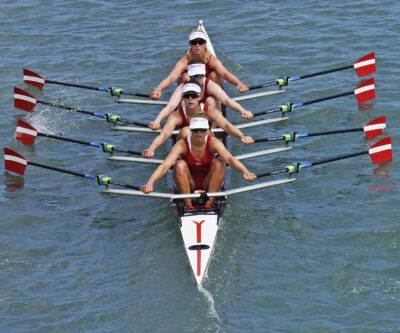
    St Mary’s beat their Gauteng rivals, St Andrew’s, in the girls’ 1st quad race for their ninth consecutive win and their 16th in the 22-year history of the Boat Race.

    The girls from Waverley tackled the start of the 5km race as if they were in a 1 000m sprint on Victoria Lake and by the time the crews hit the first bend in the river they had opened a lead that they never relinquished. St Andrew’s came back bravely in the closing stages, but the superior fitness of the St Mary’s girls saw them close out the race.

    St Benedict’s College’s win in the boys’ 1st Eight race was their sixth in a row – with a break in 2021 due to Covid – and their ninth in total.

    Their race against St Stithians in the final was very different to that of St Mary’s. It was St Stithians who got away the stronger, and when they had opened up a one boat-length lead a quarter of the way through it looked like an upset might be on the cards. The oars of the boats got into a tangle a little while later, however, and the race was stopped.

    When it restarted Bennies were away quicker and they claimed the better line through the next bend to move ahead – a lead they kept until the end.

    Two successive silver medals for St Stithians in a row at the Boat Race shows that rowing is on the up in that part of the world. In March, they beat St Benedict’s in the 1st Eight race at the SA Schools Championships, and with a bit more luck they could well have won in Port Alfred on Saturday. Could it be that the power in boys rowing might be shifting away from Bennies after 25 years as the top boys’ school in the country?

    St Mary’s were also beaten at SA Champs – by Holy Rosary – but they came back to beat them at the Gauteng Championships in November, and the ease with which they won their race on Saturday indicates that they are likely to rule the roost in girls’ rowing for the foreseeable future.

    The hosts of the regatta, St Andrew’s College of Makhanda, won the bronze medal in the boys’ competition. They beat Rondebosch Boys’ High in a race that was also stopped for a clash of boats. Their win in the B final marked a big turnaround in their fortunes this year – they were fifth in the 1st Eight at the SA Schools Champs back in March.

    St Stithians beat Holy Rosary in the girls’ B final to finish third overall. So, there was, at least, the consolation of two medals on the day for the Randburg family of schools.

    For the schools’ rowing community, there remains yet another year’s wait ahead before they get to challenge the undisputed queens and kings of the Kowie River.

  • Bennies and St Mary’s on course to defend Boat Race titles

    Bennies and St Mary’s on course to defend Boat Race titles

    The defending champions of the Standard Bank Schools Boat RaceSt Benedict’s and St Mary’s – won the preliminary round heads race on Friday, setting both on track to further extend their winning runs in the most difficult rowing competition on the calendar.

    The St Benedict’s 1st eight finished the 5.4km time trial on the Kowie River in Port Alfred in 16 minutes 44.3 seconds, 10.4 seconds ahead of second-placed St Stithians, to set up a repeat of last year’s A final.

    St Mary’s Waverley posted the fastest time over 4km in the girls’ 1st quad – 13 minutes and 5.7 seconds. Their close neighbours and fierce rivals, St Andrew’s School for Girls, were second, just six seconds behind. They will contest the girls A final on Saturday.

    St Benedict’s will be chasing a fifth consecutive win in the Boat Race, and their eighth in total, while St Mary’s are in pursuit of a ninth consecutive win, and a 16th in the 22-year history of the girls’ race.

    St Andrew’s has a history of meeting St Mary’s in the final, but that place was usurped in the last two years by Holy Rosary. On Friday, the Edenvale Convent managed only fourth place, and they will face St Stithians in the B final.

    There are two newcomers to the boys’ B final. Rondebosch will take on the hosts, St Andrew’s of Grahamstown. Rondebosch placed seventh in last year’s race, while St Andrew’s finished 10th.

    The racing starts at 07:30 on Saturday, with the Inland and Coastal reserves crews facing off in the girls H and boys J finals – despite the composite teams doing quite well in the time trials.

    The rest of the finals go off at 30-minute intervals throughout the day, with boys’ and girls’ races alternating. The day culminates with the A finals for the girls’ quad and boys’ eight, which go off at 15:30 and 16:00 respectively.

    Results

    Girls’ 1st quad – 1 St Mary’s, 2 St Andrew’s, 3 St Stithians, 4 Holy Rosary, 5 Somerset College, 6 Assumption Convent, 7 Clarendon, 8 Inland Reserves, 9 Germiston High, 10 Peninsula Girls, 11 DSG, 12 Coastal Reserves, 13 Mbekamuzi Secondary, 14 Grassy Park 15 Madiba Toloane, 16 Umtata High School.

    Boys’ 1st eight – 1 St Benedict’s, 2 St Stithians, 3 Rondebosch, 4 St Andrew’s, 5 Jeppe, 6 St John’s, 7 St Alban’s, 8 SACS, 9 KES, 10 Parktown, 11 Grey High, 12 Germiston High, 13 Inland Reserves 1, 14 Bishops, 15 Coastal Reserves, 16 Inland Reserves 2 17 Selborne, 18 Somerset College, 19 Madiba-a-Toloane, 20 Guzani Secondary, 21 Leonard Ntshuntshe.