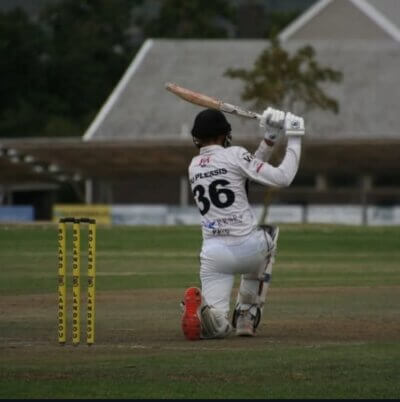
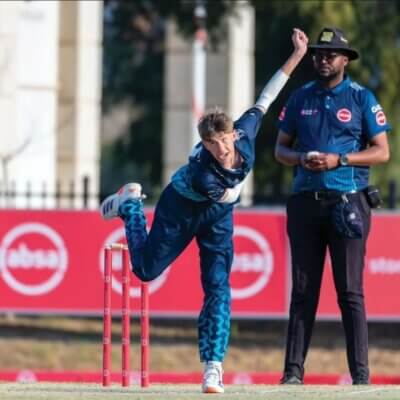
Despite being limited to a moderate 115/8 by Glenwood High in their Eston One Insurance T20 Night League match at the Beaumont Eston Farmers Club on Friday evening, Maritzburg College was able to defend their average total and come away with a hard-fought 11-run victory.
The toss went College’s way, and they chose to bat first. They lost Kyle de Bruyn in the third over, bowled by Kyle Bryan for six, but Daniel Nadasan and Deolyn Naidoo then took charge, adding 29 runs in 3.4 overs before Naidoo exited, caught off the off-spin of Bryan for 14.
Three runs later, on 49, Nadasan was run out by a combination of Karabo Ntsieng and Olwami Zondi for 24 from 20, which had included three fours.
Karl Dedekind bashed a six and a four in a 15-ball 20, but College’s innings, which had struggled for momentum, just couldn’t manufacture it.
Luka Puddu weighed in with 16, but was unable to find the boundary, and Reece Willson struck an unbeaten 15 from 19, with only one four, but College’s 115/8 was nothing to write home about.
EsihleGasa wrecked the Red, Black, and White‘s middle order on his way to figures of 3/20 from four overs. Kyle Bryan played his part with 2/20 from four, and Akhil Maharaj snapped up 2/24 from four.
Up front, Bandile Mbatha went wicketless but did a good job, conceding only 12 runs from his four overs.
In their reply, Glenwood saw only three batsmen make it into double figures, led by opening batsman, KaraaboNtsieng, who top scored with 19 from 23 balls, with a four.
Kyle Bryan showed off his all-round game with 18 from 22, with two fours, and KrianJugoo made 17 off 15, but once College claimed a second wicket, which left Glenwood on 38/2 in the seventh over, the Green Machinelost their way. They slid to 58/6 after 11.4 overs, then 80/9 after 16.2 overs.
A battling unbroken stand of 24 between EsihleGasa, who made eight, and Vincenzo Loutz, who also made eight, took Glenwood beyond 100, but they couldn’t take the kinds of the risks that more wickets in hand would have afforded them in their run chase.
Nathan Pembridge was the destroyer in chief, knocking over 3/15 in four overs, while Reece Willson bowled splendidly with the new ball, capturing 2/14 in four. Akhil Barath undermined the Glenwood reply with a return of 2/20 from four.
SCORES
Maritzburg College 115/8 (Daniel Nadasan 24, Karl Dedekind 20, Luka Luddu 16, EsihleGasa 3/20, Kyle Bryan 2/20, Akhil Maharaj 2/24); Glenwood High 104/9 (Karabo Ntsieng 19, Kyle Bryan 18, KrianJugoo 17, Nathan Pembridge 3/15, Reece Willson 2/14, Akhil Barath 2/20).
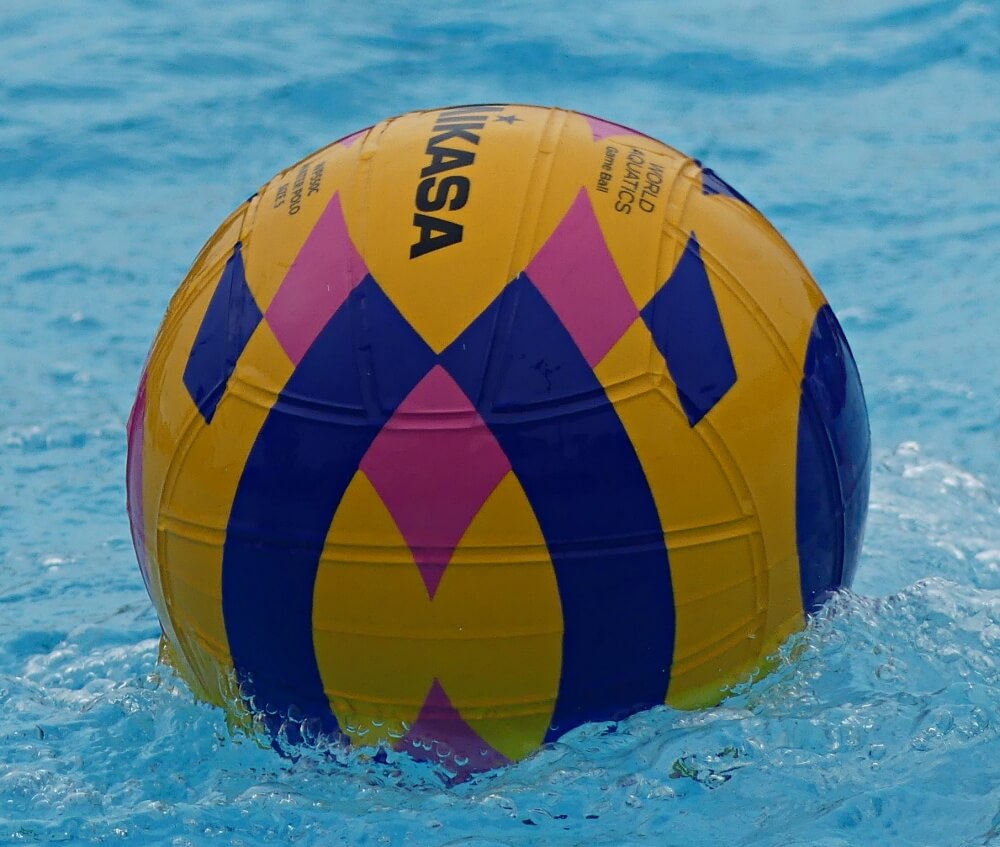
The opening day of the 3rd Annual Beach Water Polo Tournament got underway at St Alban’s College, in Pretoria, on Friday. The event, which features eight men’s clubs’ teams, and 14 open age group schools’ teams, runs through until Sunday.
In Pool A, a familiar powerhouse, St John’s College, made a commanding start to their campaign, overpowering Parktown Boys’ High 19–0 before cruising to an 11-1 defeat of the Zimbabwean side, Christian Brothers College (CBC) Bulawayo.
Earlier in the day, CBC had opened their challenge with an impressive 12-5 win over St Peter’s College.
St Peter’s, though, bounced back in style, showing strong character in a determined 11-6 win over Parktown Boys’ High.
Afrikaanse Hoër Seunskool (Affies) played three tough matches and came away with two inspiring victories, defeating St Alban’s 8-5 and King Edward VII (KES) 7-3 before coming up short against St John’s, who improved their record to three from three with an 8-5 win.
After going down to Affies, St Alban’s showed resilience when they outlasted KES 6–5 in a nail-biter. That was followed by a 14-3 dismantling of Parktown. KES suffered two hard-fought defeats, but they came out on the right side of another closely contested clash, scoring an 8-5 win over CBC Bulawayo.
In Pool B, St Stithians College stamped their authority and staked their claim as the team to beat by going three for three. In their opener, a key clash against St David’s Marist Inanda, Saintscame away with a 7-4 win.
They enjoyed a routine 12-4 victory over the St Alban’s 2nd team before wrapping up their assignments with a 9-5 win over Jeppe High School for Boys to finish the day comfortably on top of the group standings.
Jeppe ended the day in second spot, with Pretoria Boys High in third. Boys High beat the St John’s College 2nd team 6–2, but lost a nail-biter to St David’s, who snatched an 8-7 win in a tense, closely fought encounter. That victory left the Sandton school in fourth place after Friday’s action.
St Benedict’s College picked up a narrow 5–4 win over the St Alban’s 2nd team but came up short in their other fixtures.
POOLS
Pool A
St John’s College 1st team
Afrikaanse Hoër Seunskool
St Alban’s College 1st team
King Edward VII School
St Peter’s College
Parktown Boys High School
Christian Brothers College Zimbabwe
Pool B
St Stithians College
Jeppe High School for Boys
St David’s Marist Inanda
Pretoria Boys High School
St Benedict’s College
St John’s College 2nd Team
St Alban’s College 2nd team
RESULTS
POOL A Affies 8-5 St Alban’s
St Peter’s 5-12 CBC Bulawayo
Parktown 0-19 St John’s
Affies 7-3 KES
CBC Bulawayo 1-11 St John’s
St Peter’s 11-6 Parktown
St John’s 8-5 Affies
St Alban’s 6-5 KES
St Alban’s 14-3 Parktown
CBC Bulawayo 5-8 KES
POOL B St David’s 8-7 Pretoria Boys High
St Alban’s 2nd team 4-5 St Benedict’s
St Stithians 7-4 St David’s
Jeppe 6-0 St John’s 2nd team
St Alban’s 2nd team 4-12 St Stithians
St Benedict’s 2-6 Jeppe
Pretoria Boys High 6-2 St John’s 2nd team
St Stithians 9-5 Jeppe
St John’s 2nd team 7-4 St Benedict’s
Michaelhouse‘s Ethan Muir played a magnificent innings at the top of the order to lead his team’s batting onslaught in an Eston One Insurance T20 Night League clash with their great rivals, Hilton College, at the Beaumont Eston Farmers Club on Wednesday.
‘Housebatted first, and with Cody Sander providing superb support to Muir, the Balgowan boys got away to a flying start, with the duo putting on a marvellous 173 for the first wicket from 19 overs.
Muir led the way, launching seven sixes and blasting nine fours in a 56-ball knock that produced 106 runs. Sander, meanwhile, was more circumspect, but his 61 from 63, which included six fours, was the perfect foil to Muir’s aggressive attack.
They departed in successive balls, with Sander caught by Ben Hockly off SangeQangule, from the last ball of the 19th over, and Muir out on the first ball of the last over, caught by Luke Campbell off the bowling of Sechaba Gude. By then, though, the damage had been done.
Michaelhouse scrambled a further 13 runs off the remaining five balls to set Hilton a target of 9.35 runs per over to win.
Amidst the carnage, Jayden Roux did well to concede only 21 runs from his four overs, while SangeQangule finished with 1/28 from his four. Sechaba Gude picked up 2/37 from four.
In reply, Hilton lost their dangerman, Ben Hockly, early, caught by Cody Sander off Rex Wardlaw for five. When Alex Pitman was LBW to Preston Greene for 18, Hilton had slipped to 34/2 in the fifth over.
James Ogilby and Jayden Roux, though, gave their side some hope with a stand of 89 for the third wicket from 10.2 overs. It was ended when Graydon Leslie caught Roux off Thandanani Zuma for 31 from 36 balls, with a single four.
Unfortunately for Hilton, no one else, besides Ogilby, reached double figures, and that was not good enough. Ogilby, though, played a fine knock, striking five fours and three sixes in his 71 off only 40 deliveries.
Thandanani Zuma inflicted most of the damage with the ball, capturing 4/40 from his four overs. The rest of the attack was steady more than special, but they didn’t need to be special after the outstanding performances of their two opening batsmen.
After 20 overs, Hilton had reached 171/9, still 15 runs shy of the Michaelhouse total.
On Thursday, back at the Beaumont Eston Farmers Club, St Charles College had far too much firepower for the Tuskers Hub u19 XI and cruised to a 125-run win.
Batting first, Saints powered their way to 180/8, with AJ Bosman cracking an unbeaten 53 from 34 deliveries, with five fours, while opening batsman Thando Zama laid into the Hub attack, smashing a six and six fours in a quickfire 39 from only 16 balls. Caleb Sharp and Connor Simpson contributed 22 each.
Three bowlers picked up two wickets each from their four overs, with Thubelihle Ndlovu returning 2/26, AphileNzama 2/28, and Jaydon Govender 2/29.
The Hub XI’s reply never got going. Only one score reached double figures and that belonged to extras, with 12. Apart from that, seven from AphiweNzama, and seven from Quashaun Dominique was the best a Tuskers Hub batsman managed.
Their innings lasted only 14.4 overs, and they were skittled for just 55 runs.
St Charles used seven bowlers and every one of them picked up at least one wicket. Connor Simpson led the way with 2/2 from two, while Keegan Vermaak knocked over 2/9 from two, and Ryan Clarke 2/14 from three.
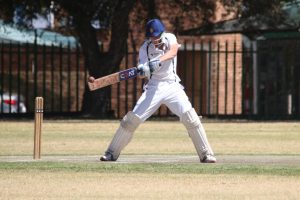
The Eastern Premier League has taken on a fresh look for the 2025 season, with teams now having just one round in which to secure a place in the Fain Noordvaal Playoffs later in the year.
Previously, the league featured two rounds of 50-over fixtures. This year, however, only one 50-over round will be played, followed by a second round in the Time Cricket format—designed to test youngsters’ abilities in the longer game.
The team that finishes top of the standings at the end of the first round will earn automatic qualification for the Noordvaal series, upping the pressure and leaving Hoërskool Hans Moore with everything to play for.
The Moories are the reigning Noordvaal champions, having defeated Hoërskool Middelburg in last year’s final at St Alban’s College—a historic triumph, as it was the school’s first-ever title.
That puts the pressure squarely on the shoulders of captain Adrian Watson and his charges. Watson, nevertheless, appears to have hit form at the perfect time. On Wednesday, 3 August, he dismantled Hoërskool Dinamika with an astonishing innings of 196 from just 129 deliveries.
This Saturday, however, Hoërskool Marais Viljoen, playing at home, will pose a sterner challenge. As one of the league’s strong contenders, it will be intriguing to see what tactics captain Jaden Govender and his side devise in their bid to topple the Moories.
The Alberton-based outfit must beat Hans Moore to keep their campaign alive, after falling to another of the favourites, Hoërskool Kempton Park.
The Kempies, meanwhile, face Benoni High School on Saturday. Coach Johan Fourie has assembled a balanced side, with Khaya Majola fast bowler, Kristiaan du Plessis leading the attack. All-rounder Wian Pieters, who also featured at the 2024 Khaya Majola Week, will be central to their hopes with both bat and ball.
Should Hans Moore prevail on Saturday, the race for top spot will almost certainly come down to their clash with the Kempies—fittingly, in the final round of the 50-over phase.
In the third fixture of the weekend’s Easterns action, Hoërskool Dr EG Jansen travels to Alberton to take on Dinamika. The hosts are still smarting from the heavy defeat inflicted by Hans Moore and conceding 505 runs in 50 overs earlier in the week.
Their coach, Jacques Venter, a fine seam bowler in his playing days, will be desperate for his attack to step up against a dangerous-looking Jansie side.
Over the past four years, Hoërskool Waterkloof have dominated the Titans scene, making history as the first side to claim consecutive titles across as many seasons.
This year, however, the landscape looks rather different.
The Klofies are by no means a weak outfit, boasting leaders such as middle-order batsman Riley Miller and wicketkeeper-batsman Rico van der Walt, both brimming with First XI experience. In addition, a new generation of talent is emerging. Opening batsman AJ de Villiers has already announced himself with a century in the league, underlining the depth at Waterkloof’s disposal.
The real shift, however, lies in the rise of three other sides who have assembled some of their strongest teams in recent years.
Hoërskool Garsfontein, unbeaten in their opening two matches, already field three players who have surpassed the 100-cap milestone.
Their captain, Xander Venter, has been involved in Cricket South Africa’s talent identification camps with an eye to the next ICC Under-19 World Cup, while Reuben van Zyl’s bat has already produced two centuries in as many matches. The third centurion, Echard Struwig, has been a game-changer with both bat and ball, stepping up as a match-winner when his side needed it most.
The Garsies, nicknamed the Ysbere, are also the reigning Titans Schools SA20 champions and national semi-finalists, following their impressive run at the national tournament, hosted at the University of Pretoria earlier this year.
Afrikaanse Hoër Seunskool also possesses serious firepower. Grade 11 all-rounder Vihan Pretorius, who toured with the South African Under-19s earlier this year, is traditionally recognised for his batting, yet has made his biggest impact with the ball in the 2025/26 season.
Alongside him, prodigy Cristian Linde has forced his way into the Affies First XI. Still in Grade 9, Linde has already established himself at the top of the order under the watchful eye of coach Pieter Cronjé.
Hoërskool Menlopark cannot be underestimated either and, on paper, look formidable. At the top of the order, the experienced Matt van der Westhuizen is hungry for runs, while youngster Jan-Willem Pienaar, another exciting young talent, has impressed in the middle order since his debut late last year. The Parkies, however, will miss their strike bowler, Tiaan Serfontein, for the foreseeable future, with the frontline quickie having undergone knee surgery.
This weekend, Menlopark meet Pretoria Boys High School, while Affies face the dark horses, Hoërskool Eldoraigne, who will be eager to prove a point as newcomers to the competition. Waterkloof host Prestige College, while the Ysbere travel to Cornwall Hill College for their third fixture of the round-robin stage.
Already battle-hardened after a tour of the UK in July, Grey College will feel more confident than most in the early stages of the season. Photo: Grey Kollege on Instagram.
Grey College vs Selborne College
While it may be early in the cricket season for most, Grey College has already played eight games at the Tonbridge Festival, in the United Kingdom. At home against Selborne College this weekend, they’ll feel confident.
The schools meet in a two-day, double innings match starting on Friday. Click the link to watch the action live on SuperSport Schools.
The hosts began 2025 strongly but lost a little momentum later in the season. Their bowlers will focus on the basics to drive their challenge.
In their batting department, they have some potential match-winners, with SA Schools’ opener Christian Kind and Henru de Wet two of their primary dangermen.
Selborne started the 2025 season slowly, but they found some form later on, reaching the semifinals of the Eastern Province and Border region’s Schools SA20 competition, where they fell to the eventual champion, Pearson High.
Their challenge will be to avoid another slow start, especially facing a Grey College team that has many matches under the belt already, although most of those were played in July and their results were mixed. The point is, though, that Grey has been in action for some time now.
At the festival in the UK, they beat Tonbridge School by 177 runs, lost to Garsfontein by three wickets, lost to the Free Foresters Cricket Club Academy by two wickets, thumped Eton College by 106 runs, beat Stowe School by six wickets, fell to Shrewsbury School by four wickets, overran Malvern College by 171 runs and seven wickets, but lost to Whitgift by 35 runs and Wellington College by 69 runs.
They’ll be looking for improvement from their batsmen, who made many good starts in the UK but didn’t push on through to triple figures.
Still, looking ahead to the fixture starting on Friday, considering that Grey College won so comfortably in January while also playing at home, it would be an upset if Selborne pulls off a victory in the City of Roses. But that’s one of the joys of cricket. Upsets are a regular feature of the game.
St Alban’s College vs St Andrew’s School
Meanwhile, in Pretoria, St. Alban’s College has been preparing for the visit of St Andrew’s School. The visitors, from Bloemfontein, are an experienced team playing good cricket. They performed well at the recent Fasken Time Cricket Festival, playing to draws against Jeppe and St Stithians, but owning good first innings’ leads in both matches.
The St Andrew’s bowling lineup is versatile, with FG Botha’s leg-spin capable of turning a match.
If St. Alban’s can deliver some of the same standards of bowling that they produced in the summer, it could make matters interesting.
A victory at home, on the TC Mitchell Oval, over a school that has consistently produced some of the better cricket teams in the country for the past couple of decades would be a big morale boost for St Alban’s. But they’re going to have their work cut out for them.
School sport isn’t a spreadsheet. It’s early-morning buses, muddy socks, festival friendships and that one moment when a shy kid finds their voice. Rankings might be entertaining, but they should never be the compass for teenage sport.
The recent article “6 Reasons Why School Sports Rankings Matter” repeats the same arguments we’ve heard for years: rankings give teams “purpose,” raise standards, create national conversation, help with sponsorships, and spotlight excellence. It even claims rankings “track results, not reputations.”
Here’s the problem: the maths behind these rankings isn’t neutral, and they’re definitely not reputation-free.
The “one number” myth
Most public ranking systems in SA take results, award bonus points for things like strength of opposition, margin, goals scored, venue—and in rugby, even Historic Strength—and then divide by matches to get an average that orders schools.
Sounds tidy. It isn’t.
Small-sample bias: A school playing fewer games can hold onto a flattering average. A school that plays more fixtures introduces variance and gets punished. There’s no confidence interval, no margin of error—just a hard number that looks precise but isn’t.
Margin of victory incentives: Any system that rewards margin—even if capped—creates pressure to keep starters on longer, run up scores, and manage games for the table instead of player welfare. That’s not what school sport should be about.
Historic Strength: The claim that rankings “track results, not reputations” falls flat when reputation is literally baked into the formula. If your points are weighted by last year’s reputation, you’re not measuring results alone.
Schedule distortion: South African school calendars are uneven. Some schools barely cross provinces; inter-regional fixtures are sparse. That makes transitive comparisons (“we beat those who beat them”) unreliable. A polished number hides shaky maths.
Data quality: Festivals mean short turnarounds, different formats, astro versus grass, altitude versus sea level, home/away inconsistencies, and missing results. The formula treats all inputs as equal. They’re not.
Rankings distort behaviour
Beyond the maths, there’s a bigger issue: what happens when adults start chasing a ranking?
Coaches optimise for the table rather than development: fewer rotations, fewer opportunities for bubble players, less willingness to experiment.
It can push schools toward “fixture gaming”—picking opponents and timing to protect averages rather than stretch programmes.
That’s not raising standards. It’s narrowing them.
What actually raises standards
At SuperSport Schools, we see something different working every week. High-intent viewership isn’t driven by who’s 7th or 9th on a list. It’s driven by derbies, festivals, rivalries, and stories about young talent that communities rally behind.
That’s what builds sponsors’ value too: context, consistency, community. Not a number next to your school name.
If people still want rankings…
We’re not saying ignore data. But let’s do it better:
Move from a single table to a dashboard. Track a Form Index (last five games). Show Fixture Strength Quadrants (A/B/C/D level opponents). Publish Development Minutes(how many U16/U17 minutes are being played in 1st teams). Flag a Welfare Lens(minute loads, blowout frequency). Add Equity Adjusters (context like travel demands and facilities).
If a ladder must exist, put guardrails around it. Publish the full formula and weights, including how “Historic Strength” is set and decays. Show tiers with uncertainty, not a false 1–100 precision. Enforce minimum game thresholds and normalise festival conditions. Cap margins with diminishing returns, so there’s no incentive to chase 50-point wins. Recalibrate home/away adjustments annually.
That would at least make it transparent, credible, and less distorting.
Our choice
For us, the bigger scoreboard isn’t a number on a website. It’s how many kids are playing, how many parents are engaged, how many communities are connecting through sport. It’s how often school sport becomes a platform for growth, belonging, and opportunity.
That’s what we’ll have to continue to invest in within school sports.
Because school sport is about far more than a rank—it’s about moments, memories, and pathways that last a lifetime.
These views are the views of the author and do not necessarily reflect the opinion of SuperSport Schools.
The RESA U19 team photographed earlier this year during the Gauteng Engen Cup. Photo: Simo Visuals on Instagram.
September and Spring begins with another highly anticipated weekend of action in the Gauteng Development League (GDL), with four of the top five teams facing one another.
Key matches among the front-runners on Saturday include Remember Elite Sport Academy (RESA) against Mamelodi Sundowns, at Clapham High School, in Pretoria, and Highlands Park against SuperSport United, at Balfour Park.
In the lead-up to the RESA versus Sundowns match, SuperSport Schools Plus interviewed Sandile Mathumbo, the Sporting Director and u19 coach of RESA.
As Sporting Director, Mathumbo and his team design the academy’s technical curriculum. He leads the coaching, technical, and support staff at RESA, overseeing the boys’ and girls’ development programmes and senior teams.
In the 2024 season, the RESA u19 side finished twelfth in the GDL, but their results are much improved in 2025. Mathumbo spoke about the shift in mindset that has delivered better results.
“If you look at the GDL, it’s always a four-to five-year cycle,” he said, “from the time a player is introduced into the academy set-up, when he is 13 or 14 years old. That player will then engage in the programme for the subsequent five years, until reaching the age of 19.
“Those who enter the programme early must navigate their developmental journey, and it is at the conclusion of this process that we can assess their readiness for advancement to higher leagues or professional environments”, he explained.
The RESA U19 team has been a top contender with good performances this season and is currently ranked among the top five teams contending for the GDL title. Photo. Steals By SK on Instagram.
Over the past four-plus years, the young players have experienced positive development. Mathumbo attributed that to the coaches who have guided the players during that time.
The fruits of that development are now transparent at the u19 level, where the players are in the competitive phase of their growth.
“[In] the junior levels of the GDL, it’s mainly development and, therefore, you cannot judge the readiness of a player at 13 or 14, but when we get to u16 and above, it’s the competition phase.
“We start teaching the players how to implement tactics and how to win. It’s good to see that our boys, in terms of readiness, are showing hunger and performing strongly in certain competitions, including winning the Kings Cup, earlier this year.”
In 2025, RESA has now been in the mainstream of the GDL for four years. The value that they have derived from that experience has revealed itself, and it has also highlighted the excellent work being done at the club.
The GDL is a tough league, Mathumbo stated. “The top five teams – Highlands Park, Mamelodi Sundowns, SuperSport United, Randburg AFC, and RESA – are competing for the league title this season.
“It’s going to be a cinematic end to the league. It’s going to be a blockbuster.
“In moments like these, a great deal is required from the players, particularly from the technical players, to ensure that we compete until the final day of the season,” Mathumbo explained.
Teaching the players how to win is essential, he added. However, they also require a smooth transition to the competitive stage of their development. “For this, it is necessary to have someone with a profound understanding [of the game’s demands], as pushing these boys into high competition without proper guidance can lead to detrimental effects.
“You need to understand that it’s a gradual transition, and we are lucky at RESA to have coaches that understand the phases of development,” Mathumbo told SuperSport Schools Plus.
RESA’s emphasis is on improving the performance of young players, including their psychological and tactical development – all of which contribute to the development of either a proficient or deficient player. If any of those elements is mismanaged during the developmental stage, it could result in an incomplete player or one who faces difficult psychological challenges.
GDL supporters are eagerly anticipating one of the most highly anticipated matches of the season as RESA faces off against Bafana Ba Style this upcoming Saturday, 6 September. Photo: Supplied.
Mathumbo said some of the club’s players will, at some point in their careers, undergo testing at a professional level. Consequently, when the young men have been nurtured to achieve success, some of the coaches are surprised by the players’ inability to maintain professionalism over an extended period of time.
At RESA, Mathumbo said, an emphasis is placed on performance factors during the developmental stages.
“A player like [PSL star] Thabang Monare, is a prime example of the players we are trying to create at RESA. He is never in the newspaper for wrong things, no bad publicity, always giving his all,” Mathumbo said.
“He treats his football as his career, and he knows that there will be life after football. He is business inclined. He gives back to the club, showing how wholesome he is as a human being.”
Monare, who is currently with Sekhukhune United, progressed through the ranks of RESA and, besides Sekhukhune United, has also represented Orlando Pirates, Bidvest Wits, Jomo Cosmos, and the South African national team, Bafana Bafana. He exemplifies the professionalism that they aspire to achieve at RESA, Mathumbo said.
Winning the GDL title would be a major milestone for the Vereenging-based club. Coach Mathumbo has emphasised that fact to his players, saying, too, that it is a major accomplishment to compete against some of the nation’s finest clubs, including their opponents on Saturday, Mamelodi Sundowns.
The match is anticipated to be a box office showdown. Even though Sundowns has home ground advantage, Mathumbo is expectingit to be a tough challenge for both outfits.
“We are two great teams. We both have to prepare. We are at the same level of competition, same level of talent,” he said.
Heading into the contest, Mathumbo likened himself and his RESA team to David with five stones.
“I’m the underdog. Obviously, Sundowns is a bigger organisation, but we are preparing hard. We have faced them a couple of times, and those have been tough games. It hasn’t been easy, even for them,” he reckoned.
It’s about delivering on the day, Mathumo stated. Sometimes, when both teams showcase their excellence, football is the winner. When a memorable game is played, the outcome is secondary. What truly matters is that everyone remembers that game.
The RESA coach said his hope for Saturday’s clash is that an entertaining, evenly contested, and well officiated game unfolds.
“Because we are in competition, as a coach I hope we will come away with the much-needed points to close the gap,” he concluded. “We are in high spirits. The team is looking good.”
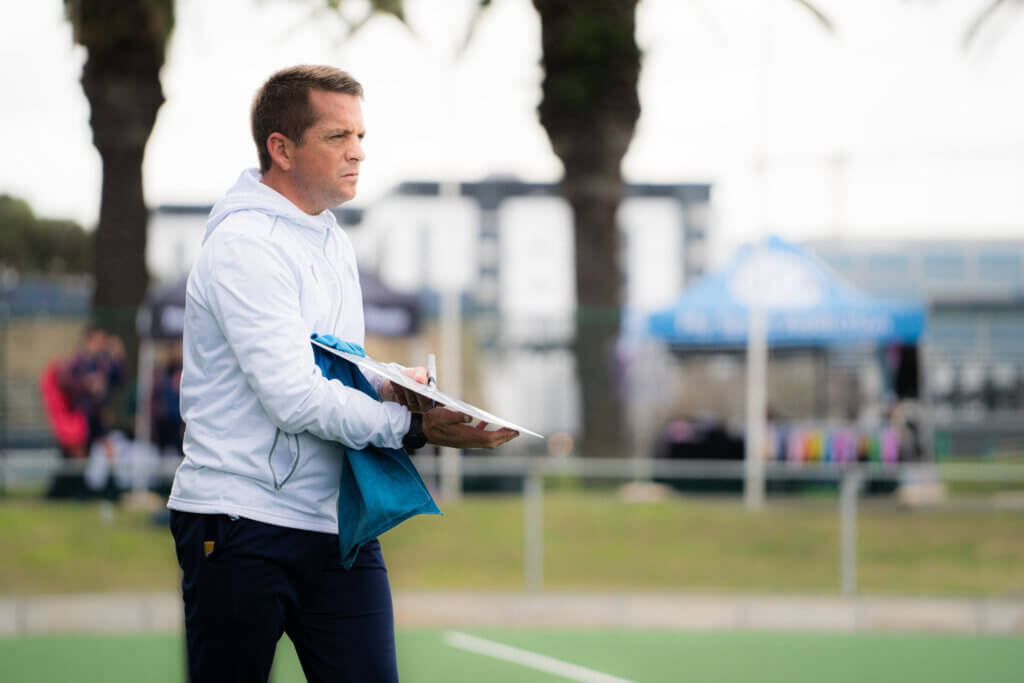
Parel Vallei’s first team coach Wayne Coetzee has not only changed the girls’ programme at the school, but he has also found himself changed by the new challenges he has faced. Photo: ES MEDIA
Coetzee had plied his trade at the Bloemfontein school for most of his coaching career, but, he felt, it was time to step into the unknown and embark on a new challenge.
Bomber, as he’s affectionately known, took over the girls’ hockey programme at PV and also took on the task of coaching the girls’ first team.
In a chat with SuperSport Schools Plus, he reflected on his time at the Somerset West school since coming on board.
“The two environments are very different,” he said. “Parel Vallei is an up-and-coming school and a force to be reckoned with in the future, and the school is working hard to put in place structures to get to the top.
“Grey College, meanwhile, has those structures, and they are already embedded in the country as a force. I think PV is that youngster that’s coming through, and you’ve got to keep an eye out for them.
“What I do enjoy here, though, is that it’s not a ‘win at all costs’ environment. It’s a lot more about allowing the kids to play with freedom and not with a lot of pressure.”
There were always going to be challenges for Coetzee during the early stages of his tenure and navigating the first 10 games was tricky, but his side progressed markedly and produced some outstanding results.
Wayne Coetzee led Parel Vallei to a bronze medal at the Cape Town International Hockey Tournament. Photo: ES MEDIA
“I think we had a successful season,” he said. “I was looking back, and after the first 10 games, we ended up winning our first match only in the eighth game.
“In that period, we won two, drew four, and lost four, and then we never looked back, and that’s when our season kicked off.
“It was a lot to do with us finding one another. The players were learning my style and what works, and once that clicked, we never looked back.
“Beating Bloemhof 2-0 was nice, and we had a hell of a game versus Rhenish where we lost 0-1 and then ended the season with a solid 3-0 win over Pearson.”
While his players performed on the AstroTurf, the side was also building strong relationships and a team culture.
For Coetzee, it was his first time taking charge of a girls’ side. It was, he admitted, a fun experience. “I think I’ve become a little bit softer,” he said, laughing.
“Coaching girls almost weighs you down and makes you softer. They are fun to coach.
“With boys, you’ve got to be firmer, and you’ve got to keep trimming the tree because of their ego, but with girls, you have to keep watering and fertilising the tree.
“You have to praise them, talk positively, be a father figure, and look after their mental state.”
The coach also featured on the team’s Instagram page several times this season and said the girls enjoy having his sons around them.
“They are social media-driven and have been very inclusive, especially with my family. They love it when my boys are around. They take time to play with them. My boys want to be on the bus because they’re really good with them. It’s like a family. We care for one another.”
Jordan Boer represented the SASHOC National Week winning Boland u18A side and was also included in the SA Schools team. Photo: Shot by Shani Photography
Heading into 2026, Coetzee’s main agenda will be to continue growing the PV girls’ programme and building on the foundation laid in 2025.
Jordan Boer and Skylar Bougaard were also selected for the u18 SA Schools team, while Emihle Wulana represented the SA u17 side against Zimbabwe in August.
“The way you want to run the programme is to make the players a lot more marketable.
“Because I am one of the national selectors, it helps me coach the players and present them that way so we can have more Boland players and more SA players.
“We are fortunate to have three SA players in the setup this year with Jordan, Emihle, and Skylar.
“The more we work on the programme and get the girls in the right shape in terms of what selectors are looking for, then that number will increase,” he concluded.
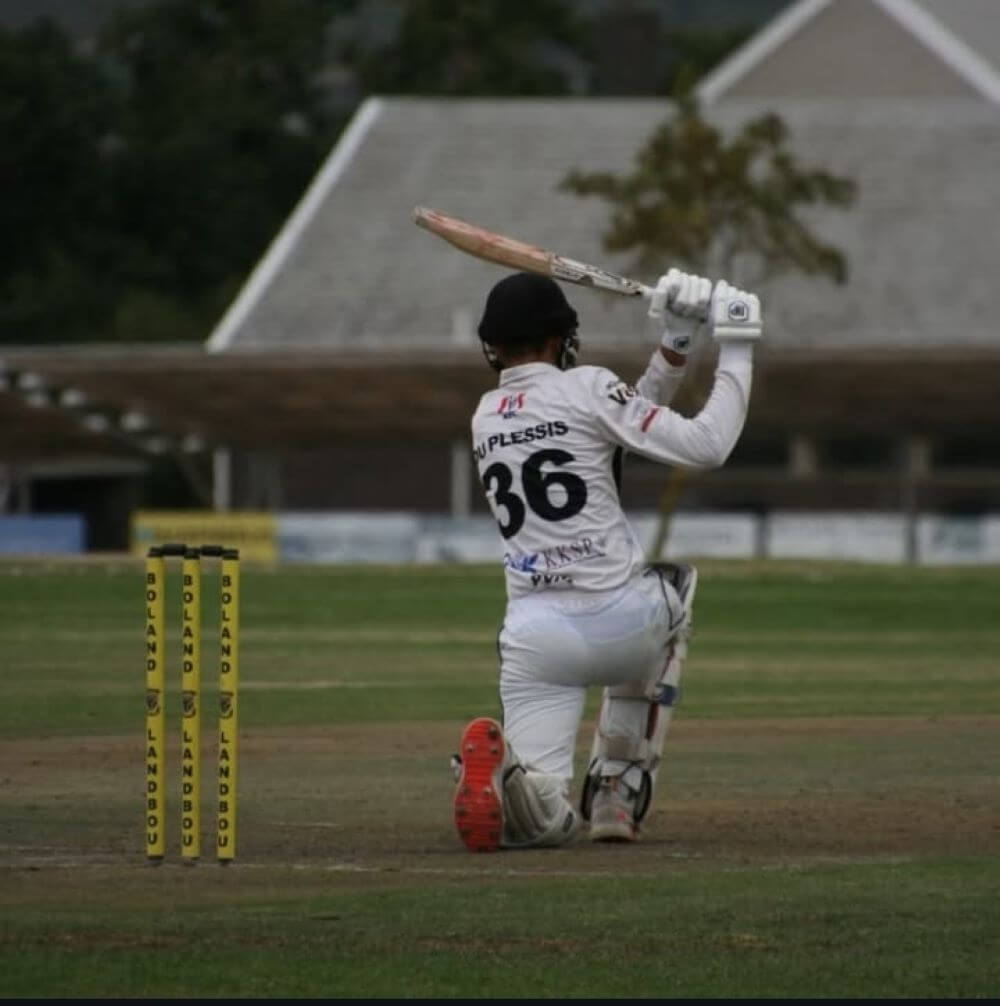
With successive matches on Saturday and Sunday in different formats, Boland Landbou faces a challenging early season test. Photo: Boland Landbou on Instagram.
Boland Landbou‘s 1st XI is on the road this weekend and has a full schedule. Firstly, they take on Hoërskool Outeniqua, in a 50-over match on Saturday before measuring themselves against Langenhoven Gimnasium in a second outing, a T20, on Sunday.
For the 50 over against the Kwaggas, the Farmers will hope to find some bounce in the pitch in George. Earlier in the year, Tiaan Ryke did a fine job leading the Boland Landbou bowling attack. The Farmers will look to him to pick up from where he left off.
The Kwaggas know their pitch well and will have a good idea of how to play the conditions. Perhaps a more conservative and orthodox batting style may favour them this weekend, especially with it being an early season match. Hitting out against a team expected to bring aggressive pace and bounce would be a risky approach.
Fresh off the rugby season, the Farmers might be wise to also follow a conservative formula when they visit the crease. Cricket is a confidence game, and that is something that is built through time spent out in the middle. It all starts at the top of the order, where withstanding the challenges posed by the new ball bowlers is the key to laying a foundation and building confidence.
Of course, Sunday’s T20 against Langenhoven Gimnasium provides a different set of circumstances, perhaps an opportunity for the Farmers to experiment a little ahead of their Schools SA20 campaign.
For Langenhoven Gimnasium, the clash will be about getting in some game time, and their batsmen will be in for a tough test from the Paarl outfit’s bowlers, who will challenge them both with pace and with spin.
The course of a T20 match can flip very quickly. Two or three dominant overs from the batsmen, or two or three quick wickets for the bowlers can make all the difference. Intensity is the name of the game, doling out pressure and handling pressure. That’s what both teams will be aiming to achieve on Sunday.
As the underdogs, Langenhoven will be under less pressure. They might feel less inhibited about hitting out, while the bowling task need not be complicated: line and length. Some aggression from their pace bowlers would help, too.
Early in the season, the game is less predictable with sides seeking to answer questions, especially those about the makeup of teams, with new players stepping up to 1st XI level. That’s what makes the weekend’s clashes especially interesting.

 The opening day of the 3rd Annual Beach Water Polo Tournament got underway at St Alban’s College, in Pretoria, on Friday. The event, which features eight men’s clubs’ teams, and 14 open age group schools’ teams, runs through until Sunday.
 Michaelhouse‘s Ethan Muir played a magnificent innings at the top of the order to lead his team’s batting onslaught in an Eston One Insurance T20 Night League clash with their great rivals, Hilton College, at the Beaumont Eston Farmers Club on Wednesday.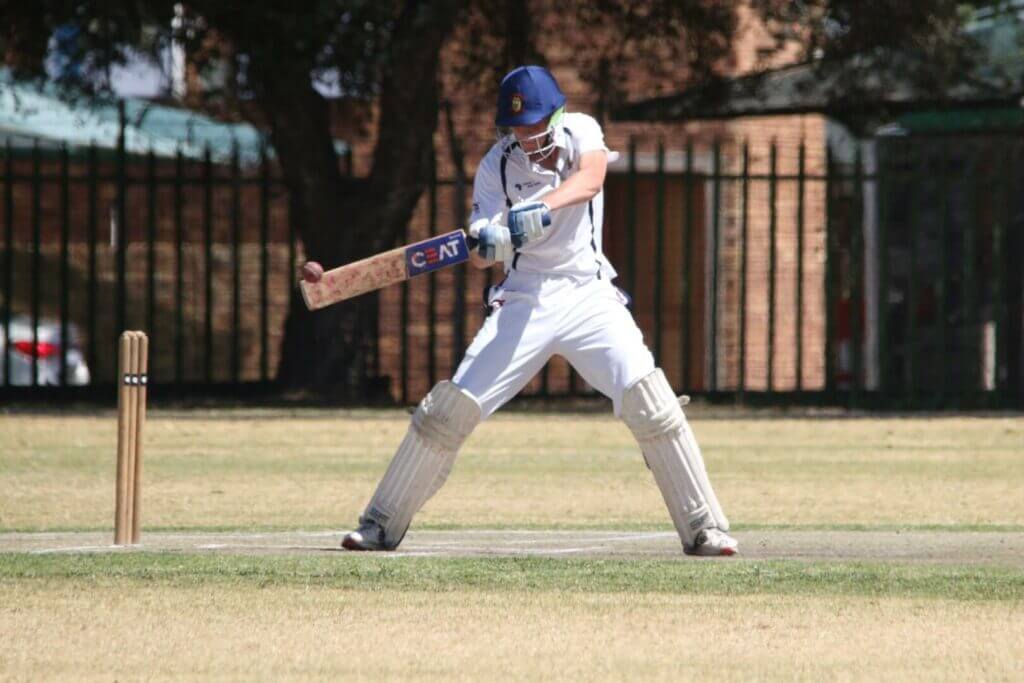
 The Eastern Premier League has taken on a fresh look for the 2025 season, with teams now having just one round in which to secure a place in the Fain Noordvaal Playoffs later in the year.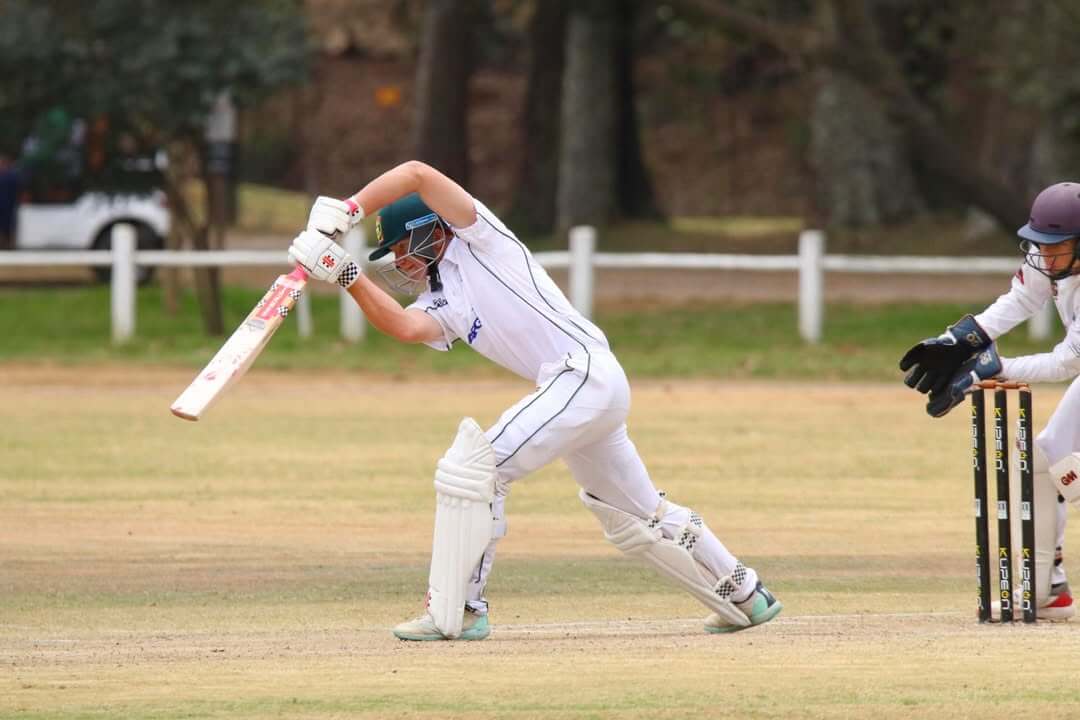

 School sport isn’t a spreadsheet. It’s early-morning buses, muddy socks, festival friendships and that one moment when a shy kid finds their voice. Rankings might be entertaining, but they should never be the compass for teenage sport.