Five nations will be on the hunt for the u20 Women’s Cosafa Championship title when the competition kicks off at the University of Johannesburg‘s (UJ) Soweto Campus Stadium on Tuesday.
South Africa will be up against Lesotho, Zambia, Mozambique, and Botswana to determine which is the best u20 team in southern Africa.
The tournament follows a round-robin format and runs from 19-24 November.
Lesotho and Zambia will get the ball rolling with a midday kickoff on Tuesday, with the hosts making their bow at 15:00 against Mozambique. Botswana joins the action on Wednesday, taking on Mozambique at 12:00.
The 15:00 match on Wednesday, between South Africa and Zambia, is expected to be one of the highlights of the tournament. Those two teams have a longstanding rivalry and the outcome of that contest could prove crucial in determining which country secures the title.
Thursday will be a rest day, to be followed by three days of matches, culminating in South Africa facing Botswana at 15:00 on Sunday.
FIXTURES
19 November
12:00 – Lesotho vs Zambia
15:00 – South Africa vs Mozambique
20 November
12:00 – Botswana vs Mozambique
15:00 – South Africa vs Zambia
22 November
12:00 – Botswana vs Zambia
15:00 – South Africa vs Lesotho
23 November
12:00 – Zambia vs Mozambique
15:00 – Lesotho vs Botswana
24 November
12:00 – Mozambique vs Lesotho
15:00 – South Africa vs Botswana
SA Rugby confirmed on Friday that 58 players have been invited to the u17 Elite Player Development (EPD) Camp, which kicks off at Boland Landbou after the end-of-year exams, running from 28 November to 5 December.
All of the invited players are part of SA Rugby’s EPD system and are still eligible to play for the SA Schools and SA u18 sides next year.
Apart from gym and field sessions, the players will also work on skills development, and strength and conditioning, under a group of specialist coaches.
Overseen by Herman Masimla, SA Rugby’s Senior Manager of Development in the new Participation and Development Department, the players will be exposed to many different coaches, including James Winstanley, Lwazi Zangqa, Cobus van Dyk, and Kathleho Lynch, all of whom were involved with the SA u18s over the past few seasons.
Ian Schwartz, the General Manager of Participation and Development, commented: “We are excited to bring together these talented young players for the u17 EPD camp, which is a crucial step in their rugby development.
“This camp will not only give them the opportunity to showcase their skills but also to continue honing the fundamentals necessary to succeed at the next level.
“Our commitment to long-term player development is a key focus, and we are confident that this group of players will form a strong foundation for the future of South African rugby.”
SA Rugby U17 EPD Squad
Bulls: Roal Kruger, Zirk Meyer, Albert Smit, Stefan McDonald, Nicolaas Grobler, Ruben Groenewald, Christiaan de Wet, Junaide Pasensie, Junaide Stuart, Luan van den Berg, Thabiso Simelane. Border: Robert-John Osonkwu. Eastern Province: Ukekwe Ikechukwe, Jayden Brewis, Damien Witbooi. Cheetahs: Toriq Schambreel, Ethan Adams. Lions: Chinedu Amadi, Jarrel Mbuyi, Andre Poulton, Brad Brown, Jeandre Uithaler. Griquas: Clinton Brits. Pumas: Vaughn van Zyl. Sharks: Lian Terblanche, Liyema Nela, Lwandile Mlaba, Sambesiwe Ndamase, Lizwe Mtetwa, Andile Ndlovu, Zekhethelo Siyaya, Jadrian Afrikaner, Wasi Vyambwera, Raphael Ajibade. SWD: Adrian Smith, Jacobus de Villiers, Kai Pratt, Ruan Swart, Keenan Myners. Western Province: Henry Rudder, Jayden Brits, Dante Christians, Briint Davids, Jordan Jooste, Jayden Joubert, Tristan Joubert, Francois van der Merwe, Quinton Potgieter, Zheemo Isaacs, Markus Muller, Jeerahno Jagers, Luchwayito Mbaliswano, Altus Rabe, Gert Kemp, Travis Pheiffer, Josh Neill, Randal-John Davids, Sango Zangqa.
JP Botha (Left) and Rinaldo Bornman (right) having a drink with Coach Stebian van der Walt and young Logan Jansen van Rensburg. Photo: Ankia Botha
Merensky Landbou Akademie was crowned the champion of the Limpopo Schools SA20 after a tight tussle with a fired-up Phalaborwa Hub on Saturday, 9 November.
The side from Phalaborwa had its tail up after an impressive performance in the second of the semi-finals earlier that morning.
They rolled Giyani Hub for a meagre 43, with Lesley Zimba returning a remarkable three wickets for only eight runs. Talenta Ndlovu snapped up a further three while conceding only 15 runs from his four-over spell. Ripfumelo Mabunda made another significant contribution, sending two Giyani batsmen back to the pavilion.
After that strong bowling performance, the Phalaborwa batsmen didn’t have too much to do, although Marcus Ngobeni looked solid in scoring an unbeaten 16 runs coming from just 12 deliveries as they advanced to the final.
The Phalaborwa bowlers continued their good form in the title decider. This time, Rivoningo Chauke hit his straps. Chauke, who’ll be playing for the Limpopo Impala side at the Khaya Majola Week in December, did the bulk of the damage, capturing three quick wickets for only nine runs from his four overs.
It, however, came as no surprise that it was Merensky’s top performers over the last couple of months, JP Botha and Rinaldo Bornman, who steered the Plasie ship to safety. Botha led the charge with another exciting innings. Smashing three sixes and one four, the wicketkeeper/batsman took the game to the Phalaborwa bowlers, striking an unbeaten 43 from 35 balls.
Bornman also played a little gem, contributing 27 runs, while some good running between the wickets by the pair led to them combining nicely for a crucial and match-winning partnership of 48 runs. Their stand helped Merensky to an average total of 121/6 from their 20 overs, but it gave them something to defend.
Phalaborwa Hub found the going tough out in the middle. Bornman tied them down with his off-spin, snaring 3/14, while the right-arm medium pacer, Xander Schoeman, claimed two timely wickets at the top of the order.
Benjie Mathebela, with 19, was the Phalaborwa Hub’s top scorer, but they came up well short, tumbling to a disappointing 75 all out, 46 runs short of the Merensky total.
Summarised scorecards
Semi-Final Two
Giyani Hub 43/10 (Thabiso Silinda 12; Lesley Zimba 3/8, Talenta Ndlhovy 3/15, Ripfumelo Mabynda 2/5); Phalaborwa Hub 45/1 (Marcus Ngobeni 16*; Ntshovelo Mkhavele 1/17). Phalaborwa Hub won by nine wickets.
With the 2024 Gauteng Development League(GDL) done and dusted, SuperSport Schools Plus explores the journeys of the teams that triumphed this season under the “Champions Series” banner.
To start, Ongama Gcwabe narrates the story of the u13 champions, Kaizer Chiefs, with the help of head coach Mohamed Bhamjee.
The 2024 journey
Coach Bhamjee and his team headed into the season as the defending champions, and that’s a tag that can be a tough one to carry, purely because of the weight of expectations.
In Bhamjee’s case, all of his 2023 players had moved on to the u15 division. The coach had to build his team from scratch while watching his players inherit the pressure that comes with being the defending champions, although they had, in reality, not won the league themselves.
With the odds stacked against him and his new lineup, Bhamjee and his players conquered all obstacles as Kaizer Chiefs won back-to-back league trophies and the GDL Top Eight Cup.
“It’s been a long year and a long season. To win the league, it’s a marathon and not a sprint,” Bhamjee told SuperSport Schools Plus in an exclusive interview.
“With us this season, it was very challenging because last year when we won the league we won it unbeaten. We won it with a few players who were at Kaizer Chiefs before and were in their second year.
“This year, I took over a team that was brand new. Every player was new. So, I had to rebuild a team in January, bringing in players from all different backgrounds and cultures, and this year we were told to sign only 16 players, so our squad size was small.
“Despite all those challenges, these boys pulled it together, worked hard and we managed to clinch the Top Eight trophy earlier this year.
“I think that came as a surprise to a lot of people,” he added. “How did we put together a winning team in such a short period? From that, the confidence built, and we went on a good run.
“We were unfortunate to lose our first game at the end of the first round. But I think that last game was a blessing in disguise. It took a lot of pressure off the players and they just went on from there and after 34 games they managed to win the league.”
Keeping rivals at bay
Bhamjee told SuperSport Schools Plus that the key to Cheifs’ successful campaign was remaining unbeaten against the other title challengers, Mamelodi Sundowns and SuperSport United, who finished second and third place respectively this season.
“The first standout moment was beating Sundowns in the Top Eight competition when no one expected us to do it. I think that built a lot of confidence in a lot of players, into us as a technical team, in the parents, and everyone that we can do this,” said Bhamjee.
“The big thing we did this year was Sundowns and SuperSport were challenging us for the league titles, but we never lost to them. We dropped two points against SuperSport United. We drew and we won 3-1.
“With Sundowns, the game at Clapham we were losing 1-2 with 10 minutes to go and we won it 3-2.
“Two weeks ago, we played them at Naturena. We were 0-1 down and ended up winning the game 3-1. So, a lot of character was shown. The good thing about our players is that they rose to the big occasions and those were very key games.”
The Bhamjee philosophy
Bhamjee outlined his philosophy for working with a young group of players. “At this age, you emphasise technical ability a lot and you bring in the tactical side next to that. Also, get them to understand what a big brand and club Kaizer Chiefs is and how fortunate they are,” said Bhamjee.
“When it comes to philosophy and all those things, for me it’s about getting them to play the Kaizer Chiefs’ way and getting them to realise how fortunate they are.”
Next week, SuperSport Schools Plus and Ongama Gcwabe will bring you the second entry of the Champions Series featuring the Mamelodi Sundowns under-15 team.
Greg Pryce was a key member of the Central Gauteng team that finished second at the 2023 Schools Water Polo South Africa Inter-Provincial Tournament, where he was named the Defender of the Tournament. Photo: Brad Morgan.
Central Gauteng, one of the traditional powerhouses of schools’ water polo, has announced its teams for the forthcoming Schools Water Polo South Africa Inter-Provincial Tournament, which takes place in Buffalo City from 7-11 December.
The event includes 123 teams of girls and boys, in the u13, u14, u15, u16, and u19 age groups, among them the Aussie Crocs, from Queensland, Australia, who will contest the boys’ u19 competition, which takes place at the Joan Harrison Aquatic Complex.
Other hosting venues are Clarendon High School for Girls, Selborne Primary School, Selborne College, Hudson Park High School, and Merrifield Preparatory School and College.
The Central Gauteng boys’ team was one of the top-performing teams of 2023, going down 7-8 in a penalty shootout in the finalagainst Western Province after the teams had played to a thrilling 8-8 draw. They will, once again, be coached by Jon-Marc de Carvalho.
Five players who were part of that side are included in the 2024 lineup. They include three boys from St John’s College, Greg Pryce, Ross Rovelli, and Nicholas Searle;St Stithians‘ Marc Smith; and Karabo Mamaregane, of King Edward VII (KES).
Sebastian Bruinders completes the St John’s contingent of four players, while Mamaregane, who netted a hat-trick when Central Gauteng won the Currie Cupin March, is joined by three others from KES, Judah Dos Santos, Harry Wilkins, and Jack Wilkins.
Marc Smith is joined by two team-mates from Saints, James Crick and Declan Wood.
St David’s Marist Inanda, who placed fifth at the St Stithians Invitational Water Polo, the second-highest finish for Gauteng sides behind St John’s, who placed third, have Mark Hudson and Ross Stuart in the team.
A very interesting inclusion is that of Alexander Kelbrick, from Affies. He opted, as he is allowed to do, to attend Central Gauteng trials and was included in the team. He’s a dangerous attacker and was one of the event’s leading goalscorers at last year’s IPT for the Northern Tigers. His Affies’ team-mate, Francois Hartslief, was included in the Central Gauteng u19B team.
U19A
Sebastian Bruinders (St John’s); James Crick (St Stithians); Judah Dos Santos (KES); Mark Hudson (St David’s); Alexander Kelbrick (Affies); Karabo Mamaregane (KES); Greg Pryce (St John’s); Ross Rovelli (St John’s); Nicholas Searle (St John’s); Marc Smith (St Stithians); Ross Stuart (St David’s); Declan Wood (St Stithians); Harry Wilkins (KES); Jack Wilkins (KES)
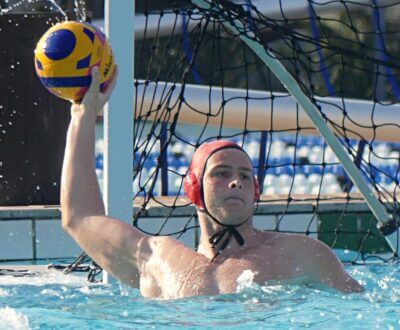
Clifton College and SA u18 goalkeeper Ross Strauss is a huge asset at the back for the KZN u19A team. Photo: Brad Morgan.
In late 2023, the Western Province u19A team was favoured to win the Schools Water Polo South Africa Inter-Provincial Tournament in Gqeberha. They did, but only after a shootout against an outstanding Central Gauteng team. KZN finished third.
Their team was filled with big-name players and they were expected to cruise to another title. But that didn’t happen. Both KZN and Central Gauteng beat Western Province, with Gauteng going on to beat KZN, who had defeated them earlier in the event, in the final.
The point of this is to say that it is likely to, again, be a tight battle between those three teams for the title in Buffalo City, where the Schools Water Polo South Africa Inter-Provincial Tournament will be played from 7-11 December. There is, also, an unknown in the mix, and that is the Aussie Crocs side, which will be making the journey from Down Under.
The KZN side won all six of their group matches at the Currie Cup and recent results from the province’s leading schools will have coach Rob Ambler‘s charges feeling they have it in them to challenge for the title. Last year, Ambler guided KZN u16 to the gold medal in Gqeberha.
This year, there’s a wider spread of schools among the players selected for KZN than in 2023, when only Clifton College, Hilton College, and Westville Boys’ High players made up the u19A side. Now, seven schools are represented, and that is evidence of the rise of the standard of water polo in the province.
Clifton usually supplies a good number of players, but this year there are two only, Ross Strauss and Ethan Lyne. Goalkeeper Strauss represented the SA team at the World Aquatics Men’s u18 Water Polo Championships in Buenos Aires, Argentina. He’s a wall at the back and was named the Goalkeeper of the Tournament at the Clifton Water Polo Tournament. It was not a home-town call. He was exceptional. Lyne is, meanwhile, an outstandingly versatile performer, able to perform effectively anywhere in the pool.
Oliver Ditz, Clifton’s captain, who also represented the SA u18 team, was not up for selection.
Northwood is on the rise and that is shown in the selections of Matthew Lortan and Lian Terblanche. Lortan, who was included in the SA u18 team, is quick with exceptionally fast hands and he was a top performer for SA at the World Championships. Terblanche, meanwhile, lends a physical presence to the lineup.
Kirk Wilson, the Durban High School (DHS) Head Boy for 2025, is another powerful player who will provide a strong presence in central defence.
Westville has three players in the lineup, including Brogan Jones, Max Scully, and Rhees Hall, with the latter two returning to the u19A team for a second year in succession. Hall, another big man, also starred for SA at the World Champs.
The Hilton contingent includes three players – Tristan Uys, Thomas Taylor, and Mitchel Garreau – but not Meyer Malherbe, their powerhouse captain, who made the KZN u19A team last year. Will his absence and that of Oliver Ditz hurt the KZN side’s chances of success?
Glenwood provides one player to the side, Aka Ngcobo.
Interestingly, nine of the players – Garreau, Taylor, Uys, Wilson, Sandri, Pohl, James, Lortan, and Terblanche – were part of the winning u16 team that Rob Ambler coached last year, so the side should have no problems with their chemistry.
KZN U19 TEAMS
u19A
Ross Strauss (Clifton), Kirk Wilson (DHS), Lian Terblanche (Northwood), Ethan Lyne (Clifton), Rhees Hall (Westville), Matthew Lortan (Northwood), Brogan Jones (Westville), Max Scully (Westville), Tristan Uys (Hilton), Thomas Taylor (Hilton), James Pohl (Kearsney), Mitchel Garreau (Hilton), Aka Ngcobo (Glenwood), Luca Sandri (Kearsney).
Non-travelling reserves: Drew Hollingsworth (Westville), Ruan Basson (DHS), Robert Smith (Kearsney), Adrian Truter (DHS), Trent Chubb (Hilton).
Coach: Rob Ambler (Glenwood)
Assistant coach: Jarred Appelgryn (Westville)
Manager: Kaylin Short (Reddam)
u19B
Trent Chubb (Hilton), Usanda Mkhwanazi (Glenwood), Ruan Basson (DHS), Kyran de Kock (Glenwood), Troy Rees-Jones (Westville), Keegan Elliot (Michaelhouse), Drew Hollingsworth (Westville), Robert Smith (Kearsney), Adrian Truter (DHS), Matthew Botha (Glenwood), Nick Naude (Northwood), Buyani Dlamini (Glenwood).
Non-travelling reserves: Ryan Spooner (DHS), Nicholas Smithers (Michaelhouse), Zaid Asmal (Glenwood), Daniel Beaumont (Glenwood), Jack Bowen (DHS).
Coach: Darren Stone (Glenwood)
Assistant coach: Sinqobile Simamane (DHS)
Manager: Amy Visagie (Northlands)
It was a spectacle. Spectators watched Ragheeba Manack as she ran from the embankment onto the field. When he saw his wife running, Yasin Manack abandoned his fielding position to head towards her. Husband and wife were headed in the same direction, but not to each other. Their target was the twins, Armaan and Morteza Manack.
That incident wasn’t a one-off thing. It happened every weekend from the time they could walk. The lush outfield was a magnet for small creatures, from frogs to grasshoppers. They fascinated the toddling twins, who rushed onto the outfield whenever they saw something.
“I don’t think they had a choice. We are a cricket-loving family, and the boys grew up surrounded by bats and cricket balls,” Yasin shared.
Yasin comes from a cricketing family. His father played first-class cricket until he was 41. Like his siblings, Yasin grew up playing club cricket, and he is a qualified Level 3 coach. His wife played action cricket for many years. In fact, they met at an action cricket match.
There was no escaping the game for Armaan and Morteza because when they visited their cousins, they walked into another version of their home. Their uncle is Hussein Manack, the well-known cricket coach, broadcaster, and former Cricket South Africa selector.
However, while their environment pushed them towards cricket, they embraced it on their own terms, and from the day they first invaded the pitch as a duo, they’ve never wanted to leave it.
It was not enough for Armaan and Morteza that they were born in the same hour and invaded the field on the same day, they also recorded their first-ever centuries in the same innings. In only their second game at u9 level, the twins, aged eight, shared a 230-run opening partnership.
Their outstanding opening partnership was a result of the twins possessing an advanced ability that was far beyond the norm for their age group. They have always played up, taking on old boys. Armaan and Morteza played their first semi-organised match when they were only four years old. It was at Marks Park Cricket Club, on the same field they invaded as toddlers. However, this time, because it was an u7 match, there were no pitch or boundary markers.
“There were no fours and sixes and I had to run to get all my runs. It was loads of fun and some of my best memories,” Morteza recalled.
The other reason for their impressive opening stand was the twins’ competitive nature. They push each other to be better. Armaan and Morteza have been competing from the time they could hold a bat and throw a ball.
“Whenever I compete with my brothers in anything, it’s fierce, and cricket is no exception. We both have that drive to win, so our games are often intense and highly competitive. It’s not unusual for things to get heated. This sibling rivalry has made me a stronger player, as I constantly strive to improve,” Armaan explained.
Thus, in addition to working together, there has always been an element of competition in their partnership.
“My brother and I have always competed with each other, even to this day,” Morteza said, “but when we were younger, we used to both open the batting, so we would always try and out-score each other, even if it meant stealing the strike.”
In the early 1990s, K. Anders Ericsson and two colleagues conducted a study at Berlin’s elite Academy of Music. They divided the school’s violinists into three groups: the first group was the stars, the students with the potential to become world-class soloists; the second group included those judged to be merely good; in the third group, they had students deemed unlikely to ever play professionally, who intended to pursue careers in teaching.
Students in all three groups started playing at around the same time, at roughly the age of five. However, Ericsson and his colleagues found that while they practiced about the same amount of time, two or three hours per week when they started, things differed as they grew older. The students in the first group practiced an average of six hours a week, at eight years of age, and increased the hours as they grew older.
The students in the second group partially increased their practice hours, but not by the same volume, and the students in the third group did not increase their practice hours by much. The study informed Ericsson and his colleagues about the importance of hours invested in honing a skill. They went on to conduct numerous studies to test this finding and they found that it held true.
Their findings formed the basis of the 10 000 hours theory popularised by Malcolm Gladwell in his cult classic book, Outliers. Armaan and Morteza’s uncle, Hussein, is a big believer in the theory. He insists that a cricket player can only get better when they test their skills against better players for extended periods.
“Marks Park has the lowest average age in the Lions Premier League A because we believe young players need to spend as much time in the middle honing their skills as possible. Armaan and Morteza have been part of the first XI side for the past two or three years,” Hussein revealed.
His perspective is aligned with Yasin’s. The boys’ father is wary of overcoaching his sons, so despite holding a level three certificate, he has resisted the impulse to coach them at home. However, that doesn’t mean that the Manack home is cricket-free. Rain or shine, hot or cold, the twins wake up early to face deliveries before they get on with the day’s events.
“Those boys are dedicated. I have seen them putting a ball in the microwave to thaw it in the depth of winter,” Hussein shared.
“Sometimes they come up to me and ask me to give them throwdowns at 21:00. I never push them to practice, but when they ask me to help them, I get up and do as they ask,” Yasin said.
The twins do not just work hard at home. They carry that work ethic to St David’s Marist Inanda, where Jeff Levin has only kind words to say about their commitment and dedication.
However, it’s not just the technical aspects that the twins focus on. They also work on their mental strength with Hussein’s help.
“We focus a lot on their cricket IQ. It’s not enough for them to just know how to hit balls,” he explained. “There is also their ability to deal with loss and disappointment. It is important that they learn to take a loss as a learning opportunity. Another thing is their conduct off the field. We focus on that, too.”
Armaan and Morteza with their older brother Hishaam.
“One of my most memorable matches happened just a few months ago when I played against Bishops, the top-ranked team in the country in the Fasken Time CricketFestival. I managed to score an unbeaten 120. This knock was significant because we ended up with a nine-wicket victory,” Armaan told SuperSport Schools Plus.
“Last year, we played in a Talent ID u19 tournament. Marks Park was in the final versus Jozi Hits, who were a really strong team and had some big-name players.
“We had to chase 201 in 20 overs, and I was batting at four. I came in early after we lost two quick wickets. My brother and I put on a 107-run partnership to get us close to the target. I scored 70-odd off 39 balls and I went out when we needed eight runs. We went on to win the match and the tournament,” Morteza remembered.
The memories above are the twins’ most memorable outings. They also demonstrate the difference between the brothers.
“While they are identical twins, they bring very different personalities and play different roles within the side,” Jeff Levin, their coach at St David’s Marist Inanda, explained. He has worked with the twins for two years as part of the school’s first XI.
Yasin, Hussein, and Levin call Armaan the team’s banker. He likes to spend time at the crease and can bat for a long time. He frets about his technique and his attacking shots are all built from a strong technical base.
Morteza, on the other hand, displays more flair and likes to push the game forward. He is a modern middle-order batsman who is likely to play an attacking shot as soon as he gets to the crease. In addition, Morteza is also a useful spin bowler, especially in the powerplay.
The difference in the twins’ approaches creates a wonderful complimentary dynamic when they bat together. It can make them appear to be unstoppable.
“One stand-out moment was when they opened the batting together last year in a Johnny Waite encounter against Northcliff and were chasing 144 in 20 overs. They knocked the runs off in 12 overs,” Levin shared.
The SA u17 girls’ team ended their Dato Mirnawan Cup campaign with a fourth-place finish in Malaysia. Photo: TeamSA
The South African u17 girls’ hockey team fell just short of finishing on the podium at the Dato Mirnawan Cup after going down 3-4 to South Korea in the bronze medal match.
The tournament, which began on 1 November, concluded on Sunday at the Bukit Jalil National Hockey Stadium in Kuala Lumpur, Malaysia.
There was joy for the hosts, after their boys’ team claimed gold, beating South Korea 3-2 in the final, while Japan defeated Australia, also by a 3-2 margin, to win the girls’ title.
The South African girls were a little unfortunate to miss out after making it through to the semi-finals.
Coach Omari-Pienaar Geyer’s side was drawn in Group Y alongside Japan and the Malaysia Tigresses. The SA girls scored a statement 4-0 win over the hosts in their opener before slipping to a 2-4 defeat against the eventual winners, Japan.
They had done enough, however, to secure a semi-final showdown with a tough Australian side that had won two of its three matches in Group X.
Coach Pienaar-Geyer’s team produced a valiant effort against the Aussies but went down 1-3 to set up a clash with South Korea on the final day.
With a bronze medal on the line, South Africa fought hard and competed until the final whistle but were squeezed out, losing by the odd goal in seven. Last year, the SA girls’ side suffered a similar fate, losing 0-2 to India in the bronze medal game.
Despite her charges not picking up a medal, coach Piernaar-Geyer praised the side and said she was pleased with the effort shown by the players throughout the week.
“I’m proud of the team,” she declared. “It’s a testament to their hard work, dedication, and skill,” she told SuperSport Schools Plus.
“Being in a different country, where they’re far from family and eat and sleep differently, is a massive challenge. Whether they win or not, competing at that level is a huge accomplishment.”
Vice-captain, Caprice Bengston in action for the SA u17 girls’ at the Dato Mirnawan Cup. Photo: National Hockey Development Programme Malaysia
The leadership responsibilities in the team were split, with coach Pienaar-Geyer opting for two captains and a vice-captain.
Jehan Abrahams and Amber Fairon co-captained the side, while Caprice Bengston served as the vice-captain.
They were the only players left over from last year’s group, and the coach praised them for leading from the front.
“It was great to see our leaders step up, especially since all three experienced the same tournament with me last year,” she said.
“So, it was kind of expected. It was also good to see how the others fed off their energy and effort.
“However, I’m really happy with how every single player rose to the occasion and led in their way.”
Assessing what needed to be improved for next year’s tournament, Pienaar-Geyer identified several areas of need. “One of the key learnings from the tournament is the urgent need for high-performance programmes in our regions,” she said.
“Developing our goalkeepers is crucial, as they play a vital role in the team’s success. Additionally, we need to focus on improving our defensive strategies, particularly in winning one-on-one situations.
“Fostering overall connections among players will enhance teamwork and performance. Training and playing together more often will always be a challenge but will be something we try and create more often with SA regional sessions.”
Pienaar-Geyer will have a strong base to build on for next year, with the majority of the players still eligible for selection.
Out of the 18-player squad, five were in the u17 category, while there were seven u16 players and six u15s.
There is, however, no guarantee that the players who toured Malaysia this year will again be selected in 2025. It will all come down to them performing well for their schools and provinces.
A top player who missed out on the tournament was Bianca Rees-Gibbs, from Eunice, who suffered a life-threatening medical issue but is now recovering.
Pienaar-Geyer had a message for her: “A special shoutout to Bianca Rees-Gibbs, who unfortunately couldn’t participate in this tournament with us. We wish her all the best for her upcoming operation and a smooth recovery journey ahead. We can’t wait to see you on the field again,” she concluded.
While the under-19 division of the Gauteng Development League is yet to be completed after rain forced a postponement of the final round of fixtures this past weekend, the other divisions have crowned their champions.
Kaizer Chiefs’ u13s successfully defended the title they won last year, putting together a dominant season.
Coach Mohamed Bhamjee and his young troops were confirmed as the league winners a few weeks ago already, which served to underline the team’s dominance.
They recorded only one loss all season. They were also held to four draws and scored a sparkling 29 victories over 34 weeks of intense competition.
After beating TS Galaxy 3-2 on the weekend, it was time for Chiefs to be officially recognised as the champions of the u13 division.
Reatlegile Mosimane excelled on the attack for the Soweto giants. He was a vital cog in the team’s success, tallying 20 goals in the gold and black stripes.
In the under-15 division, Mamelodi Sundowns walked away with the silverware following a 2-0 victory over Sevens Academy on the weekend.
‘Downs were even more dominant in the u15 division than Kaizer Chiefs were at u13 level. They accumulated 95 points in total, which was a massive 24 points clear of Chiefs, in second. Sundowns dropped points on only three occasions, losing one game and drawing two others. The rest, they won.
For those who kept an eye on the season’s results, the team’s triumph will come as little surprise. They were a free-scoring outfit, netting a whopping 114 goals, or 3.4 goals per game over the 34-match season.
The u17 division has not yet concluded, but Mamelodi Sundowns cannot be caught. They top the standings ahead of Remember Elite Sports Academy and Randburg AFC.
Playing in the heat and humidity of Kuala Lumpur, the SA u17 boys team suffered two defeats at the Dato Mirnawan Cup, both to the eventual finalists. Photo: National Hockey Development Programme Malaysia.
The South African u17 boys’ hockey teamwill, unfortunately, feel a sense of let-down after a fifth-place finish at the Dato Mirnawan Cup, which concluded on Sunday in Kuala Lumpur.
Malaysia claimed gold in the boys’ section, beating South Korea 3-2 in the final, while Japan defeated Australia, also by a 3-2 margin, to win the girls’ title.
While results didn’t go the way the South African team would have hoped, they will, nonetheless, take away valuable lessons from the experience.
It all began swimmingly for Theunis and company, who got their challenge off to a scorching start by overwhelming Canada 9-1 in their opening match.
The competition stiffened quickly, though, with the Malaysia Tigers beating South Africa 3-1 in their second outing. Then, after a tremendous tussle and a gutsy fightback, the South Africans went down 3-4 against South Korea.
In the playoffs, for fifth to eighth places, South Africa played some smart hockey to claim a sweet 3-2 victory over Australia.
That win put Justin Collins’ charges into the playoff for fifth against Canada, the team they had so handsomely beaten in their first match of the tournament.
Once more, it was South Africa’s day. They slotted five goals, kept a clean sheet, and ended their tournament on a high.
SA u17 head coach Justin Collins took charge of the national team in Malaysia for a second year in succession. Photo: National Hockey Development Programme Malaysia
Reflecting on the event, head coach Justin Collins said he was pleased with his team’s fighting spirit, which never faltered despite the side losing two of their three group matches, both of which came against the eventual finalists.
“I am very proud of the boys and the character they showed. We were never out of the contest in any game during the week,” he told SuperSport Schools Plus.
“We just had small moments that we slipped up, and this has created even more of a learning environment for our boys.
“We always knew we had to fight, but the two losses in the pool stages created an inner drive for the team and the staff.”
In both of their group losses, the margin between winning and losing was razor-thin. Slight lapses of concentration cost South Africa victory. Collins lamented those moments and said he believes his side could’ve done better.
“It was disappointing sitting and watching the final,” he admitted, “especially because both these teams were in our pool.
“We were so close against South Korea, losing 3-4 after showing lots of character and fighting back from 1-3 down to go 3-3, then to lose in the dying moments.
“Malaysia won the tournament after we ran them close. We weren’t good in the first half of that game, but showed fight, again.”
For the majority of the South African players, it was a case of one, and done. They’ll be moving on to older age groups, but several players, who are currently 16 years old, will be keen to stake a claim to a seat on the plane to next year’s Dato Mirnawan Cup.
Juan Martin in action for South Africa during the Dato Mirnawan Cup. Photo: National Hockey Development Programme Malaysia
“There were, definitely, some players that put up their hands up this week and stood up when needed,” Collins said.
“It’s always great winning games, and I truly believe our school structure is creating an incredible base for players to develop,” he added.
“We have top coaches around the country based at different schools. We just need to play better hockey for longer phases and be braver in difficult situations.
“Our defensive systems need some care and more work needs to be done across the board in terms of our angles of engagement and tracking of runners,” he concluded.
 Five nations will be on the hunt for the u20 Women’s Cosafa Championship title when the competition kicks off at the University of Johannesburg‘s (UJ) Soweto Campus Stadium on Tuesday.
 SA Rugby confirmed on Friday that 58 players have been invited to the u17 Elite Player Development (EPD) Camp, which kicks off at Boland Landbou after the end-of-year exams, running from 28 November to 5 December.
 With the 2024 Gauteng Development League (GDL) done and dusted, SuperSport Schools Plus explores the journeys of the teams that triumphed this season under the “Champions Series” banner.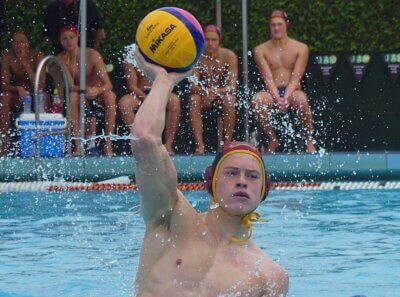

 In the early 1990s, K. Anders Ericsson and two colleagues conducted a study at Berlin’s elite Academy of Music. They divided the school’s violinists into three groups: the first group was the stars, the students with the potential to become world-class soloists; the second group included those judged to be merely good; in the third group, they had students deemed unlikely to ever play professionally, who intended to pursue careers in teaching.


 While the under-19 division of the Gauteng Development League is yet to be completed after rain forced a postponement of the final round of fixtures this past weekend, the other divisions have crowned their champions.

